
Comparative Study of Load Balancing Techniques in Cloud Computing Environments
Keywords:
Abstract
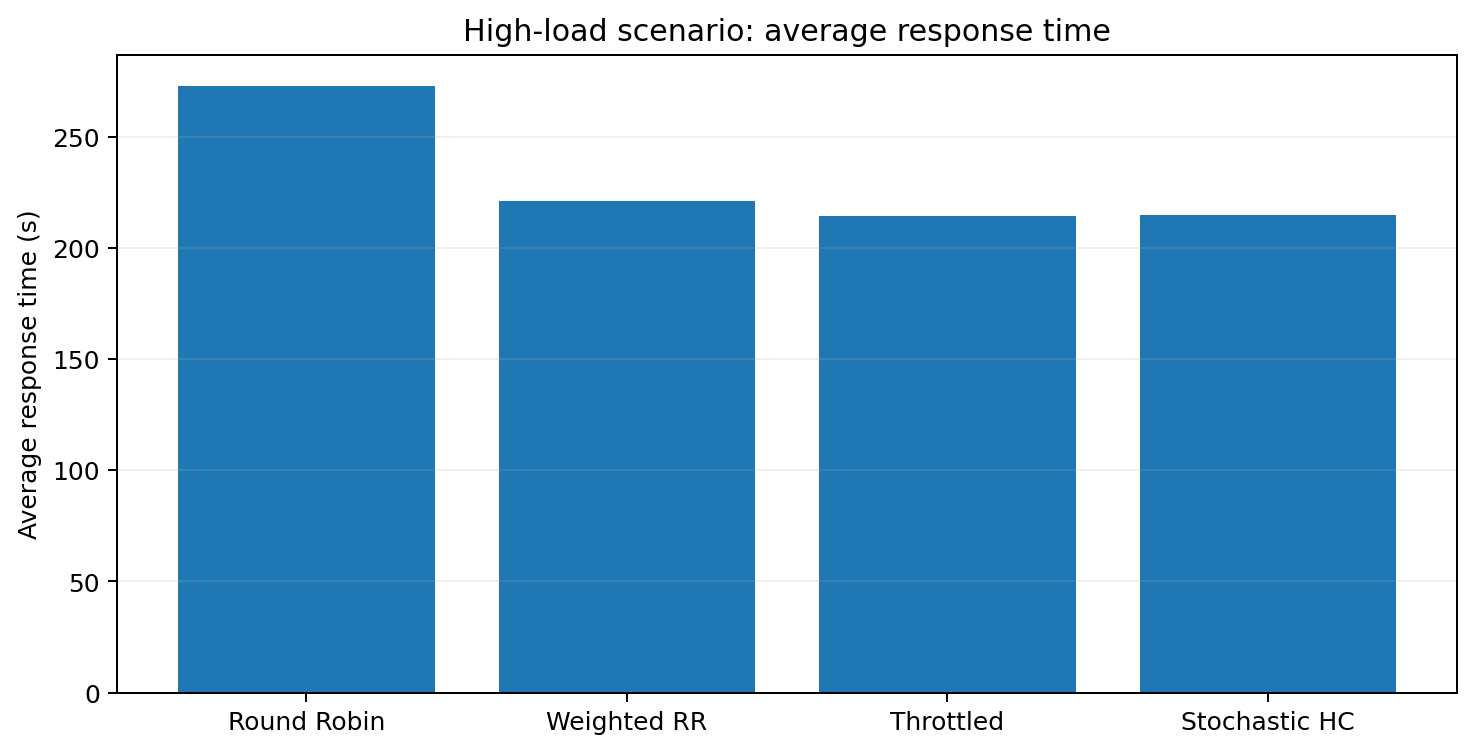
Cloud computing depends on virtualization and elastic resource provisioning to serve fluctuating workloads, but these advantages can be undermined when computational jobs are unevenly distributed across virtual machines (VMs). This methodology paper develops a reproducible framework for comparing four representative load-balancing techniques: Round Robin (RR), Weighted Round Robin (WRR), a throttled least-finish-time strategy, and Stochastic Hill Climbing (SHC). The study integrates concepts from established cloud simulation and load-balancing research published no later than 2016. A heterogeneous 20-VM environment is evaluated under low, medium, and high workload intensities using event-driven simulation logic aligned with CloudSim-style entities. Performance is assessed by average response time, makespan, throughput, resource utilization, and degree of imbalance. Illustrative results from the specified simulation show that algorithms using current resource state substantially outperform simple static allocation when the workload becomes heavy. In the high-load scenario, throttled and SHC policies maintain approximately 97% utilization and a degree of imbalance near 0.05, while RR exhibits much larger imbalance and lower throughput. The paper therefore provides a concise methodology for selecting and benchmarking cloud load balancers and shows why adaptive policies are preferable for heterogeneous, time-varying environments.
Downloads
Downloads
Published
How to Cite
Issue
Section
License

This work is licensed under a Creative Commons Attribution-NoDerivatives 4.0 International License.
