
Experimental Design and Performance Analysis of an Evacuated Tube Solar Thermal Collector Using Hybrid Nanofluids for Improved Heat Transfer Characteristics
DOI:
https://doi.org/10.65521/intjournalrecadvengtech.v15i1.1534Keywords:
Abstract
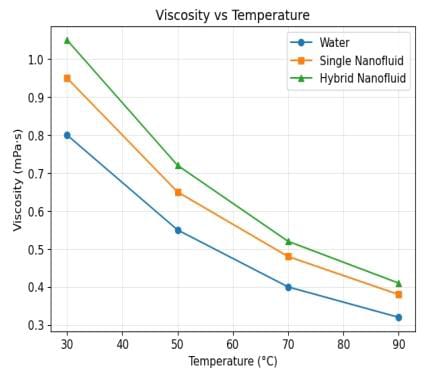
The growing demand for sustainable thermal energy systems has intensified research on high-efficiency solar thermal collectors, particularly evacuated tube solar thermal collectors (ETSCs), due to their reduced heat losses and stable performance under varying climatic conditions. However, the overall thermal efficiency of ETSCs is constrained by the limited heat transfer capability of conventional working fluids. In this study, an experimental investigation is carried out to enhance the heat transfer characteristics and thermal performance of an ETSC using hybrid nanofluids as the working medium, integrated with a phase change material (PCM)–based thermal energy storage system. Hybrid nanofluids are prepared using selected nanoparticle combinations and characterized for thermal conductivity, viscosity, and stability under varying temperature conditions. The experimental setup is designed with calibrated sensors to measure solar irradiance, fluid temperatures, mass flow rate, pressure drop, and energy storage behavior. Baseline tests using conventional fluids are compared with hybrid nanofluid operation to evaluate thermal efficiency, useful heat gain, friction factor, exergy destruction, and stability performance. Data analysis is performed using energy and exergy balance equations, thermal–hydraulic performance indices, and time-based charging and discharging analysis of the PCM storage unit encapsulated in a rectangular configuration. The results demonstrate that hybrid nanofluids significantly improve thermal conductivity, enhance convective heat transfer, and increase useful heat gain while maintaining acceptable viscosity and flow resistance. Integration of the PCM storage system effectively extends thermal energy availability during off-sunshine hours. Overall, the proposed hybrid nanofluid-based ETSC system shows enhanced thermal efficiency, improved energy utilization, and practical feasibility, confirming the potential of hybrid nanofluids as a viable replacement for mono nanofluids in advanced solar thermal applications.
Downloads
Downloads
Published
How to Cite
Issue
Section
License

This work is licensed under a Creative Commons Attribution-NoDerivatives 4.0 International License.
