Comparative Green Synthesis, Characterization, and Antimicrobial Evaluation of Silver Nanoparticles Using Selected Plant Extracts
DOI:
https://doi.org/10.65521/ijaeee.v11i1.4588Keywords:
Abstract
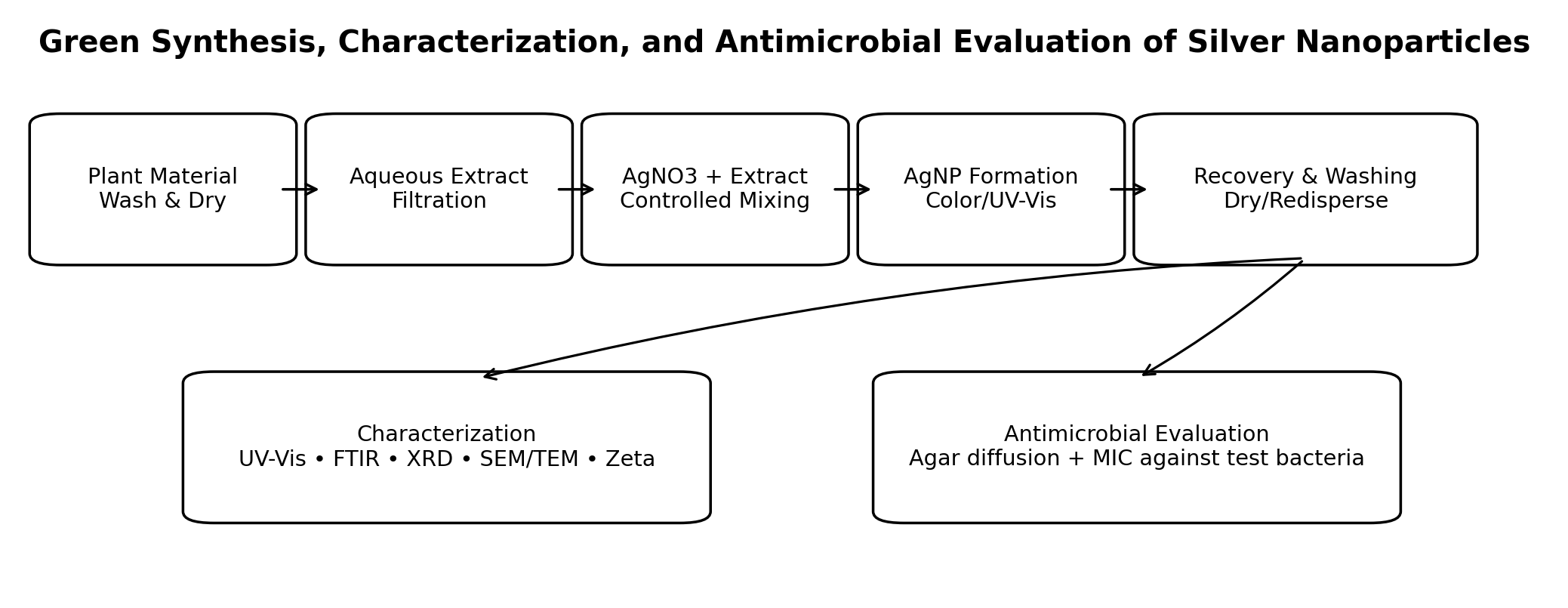
Green synthesis of silver nanoparticles (AgNPs) using plant-derived metabolites has emerged as an environmentally preferable alternative to conventional chemical reduction because plant extracts can simultaneously provide reducing and capping molecules. This methodology paper proposes a comparative workflow for synthesizing AgNPs using aqueous extracts of Azadirachta indica, Moringa oleifera, and Citrus limon, followed by physicochemical characterization and antimicrobial assessment. The procedure standardizes plant-extract preparation, silver nitrate concentration, extract-to-precursor ratio, pH, temperature, and reaction time so that the influence of plant source can be compared under controlled conditions. AgNP formation is screened by the development of a characteristic brown color and confirmed by UV-Visible surface-plasmon resonance. Functional groups associated with reduction and stabilization are examined by FTIR, crystallinity is determined by X-ray diffraction, morphology and particle size are examined by SEM/TEM, and colloidal stability is assessed by zeta potential. Antimicrobial performance is evaluated using agar-well diffusion and broth microdilution against representative Gram-positive and Gram-negative bacteria. A defined statistical plan compares particle size, spectral peak position, inhibition-zone diameter, and minimum inhibitory concentration. Illustrative methodological outcomes indicate that smaller, well-dispersed AgNPs are expected to provide stronger antibacterial performance than larger or aggregated particles. The proposed protocol is intended as a reproducible framework for plant-mediated AgNP research and emphasizes transparent reporting of synthesis variables, characterization criteria, and biosafety controls.