Extraction and Phytochemical Analysis of Medicinal Plant Compounds for Therapeutic Applications
DOI:
https://doi.org/10.65521/ijaeee.v8i1.4603Keywords:
Abstract
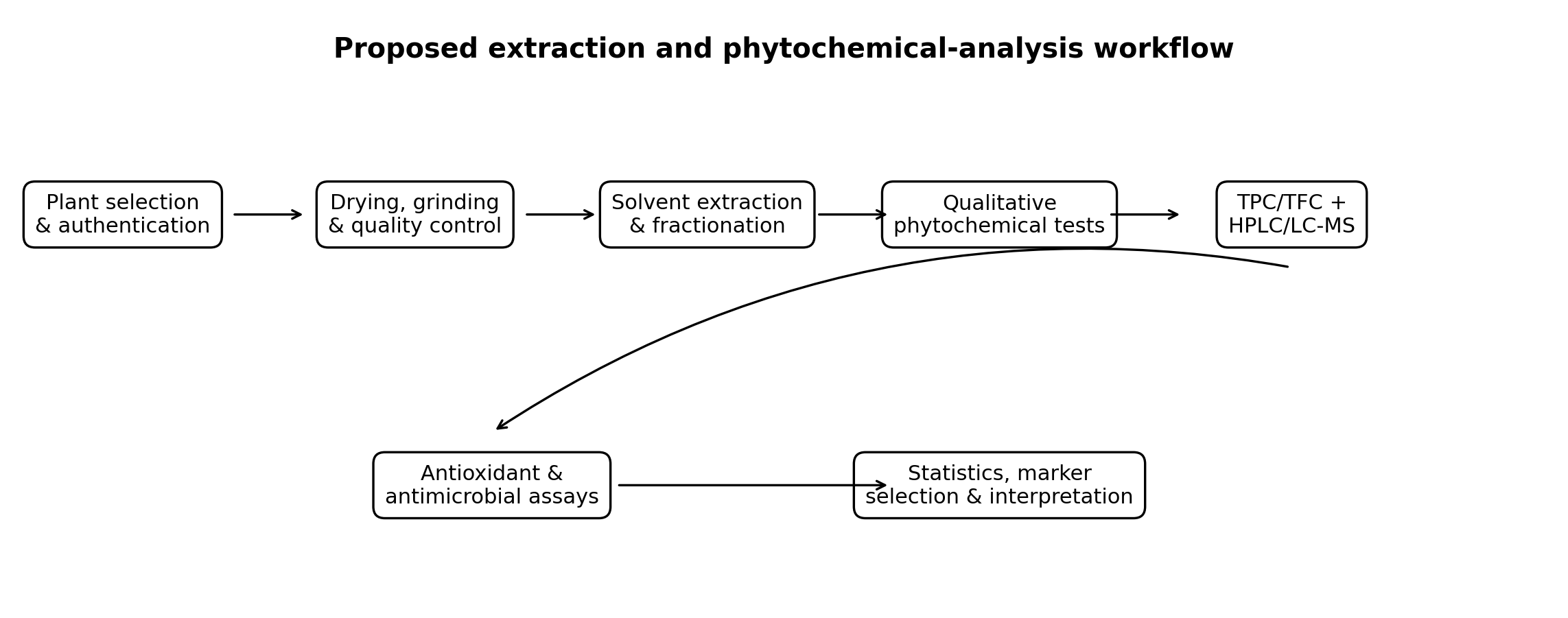
Medicinal plants remain an important source of structurally diverse secondary metabolites with potential antioxidant, antimicrobial, anti-inflammatory and other pharmacological activities. Reliable therapeutic evaluation, however, depends on reproducible extraction, phytochemical characterization and bioactivity screening. This methodology paper proposes an integrated workflow for extracting and profiling compounds from authenticated medicinal plant material. The protocol compares water, 70% ethanol and polarity-guided fractions, determines extraction yield, performs qualitative screening for major metabolite classes, quantifies total phenolics and flavonoids, and applies chromatographic profiling using HPLC-DAD and, where available, LC-MS. Antioxidant activity is evaluated by DPPH, ABTS and FRAP assays, while antimicrobial activity is screened by broth microdilution. Experimental variables are controlled through replicate analysis, blanks, reference standards and statistical testing. The framework prioritizes hydroethanolic extraction because it balances phytochemical recovery with downstream therapeutic compatibility, while non-polar and medium-polarity fractions support chemical class resolution. Representative methodology-validation data illustrate how the workflow can identify the most informative extract without implying actual laboratory findings. The proposed approach links extraction efficiency, marker-compound abundance and biological activity, providing a reproducible basis for subsequent isolation, mechanism studies, toxicity evaluation and formulation research.