An Artificial-Neural-Network-Controlled Single-Phase Unified Power Flow Controller for Power-Quality Mitigation
Keywords:
Abstract
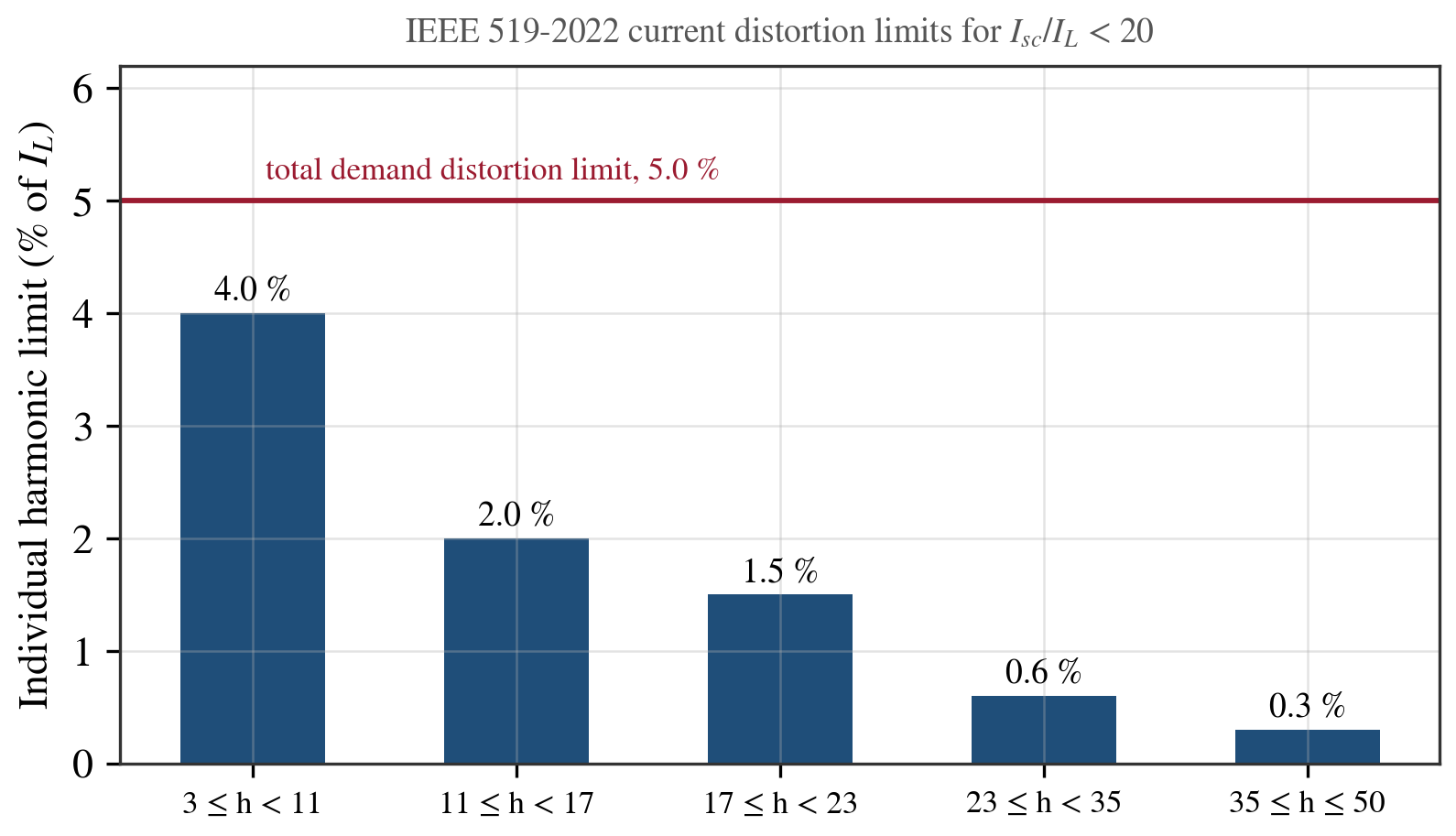
This paper presents the design and hardware realisation of a single-phase unified power flow controller whose DC-link regulation is performed by an artificial neural network, with reference extraction by decoupled double synchronous reference frame theory and gating by a hysteresis current controller. The converter chain, the series and shunt compensator control laws, the reference-frame transformation and the network structure are formalised in full, and a working laboratory prototype was constructed around a dsPIC30F4011 digital signal controller with TLP250-driven MOSFET bridges and a regulated auxiliary supply. The paper is explicit about what the campaign establishes and what it does not. The prototype was completed and connected to a digital storage oscilloscope, but no waveforms, harmonic spectrum, THD, power factor, efficiency, or simulation data were recorded. Therefore, the claimed reduction in source-current distortion cannot be evaluated or quantified from this work. Statements in the project record describing good transient response with less overshoot are identified as expectations drawn from the literature rather than observations of this prototype. This revision adds two quantitative elements. The distortion limits the compensator would have to meet are stated from IEEE Std 519-2022 rather than described as application-dependent, and the distinction between total harmonic distortion, which the paper's own defining relation expresses, and total demand distortion, which the standard actually limits, is made explicit; the two differ whenever the load is below its rated demand, so a compliant-looking figure computed one way can conceal non-compliance the other. The hysteresis design compromise is also evaluated numerically, showing that for plausible link voltages and coupling inductances the band that the record does not document sets the switching frequency across more than an order of magnitude. The paper contributes a complete and traceable design description, a precise account of the four measurements needed to close the gap, and an assessment framework in which the network, the extraction stage and the hysteresis controller can each be evaluated separately.