A Sensor-Actuated Surface Vehicle for Floating Plastic Waste Retrieval
Keywords:
Abstract
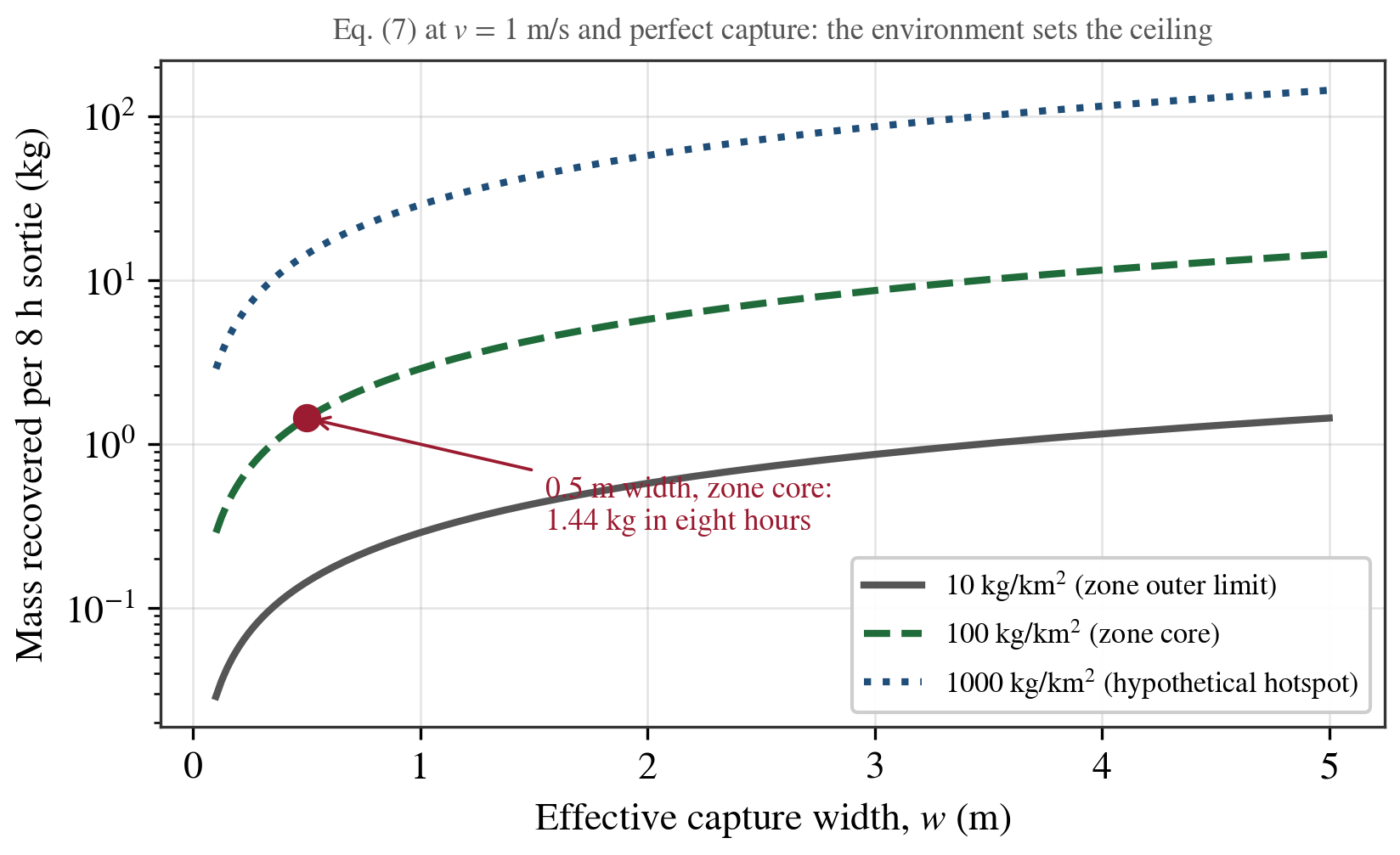
This paper reports the construction of a small sensor-actuated surface vehicle intended for the retrieval of floating plastic debris, and provides the quantitative framework against which such a machine must eventually be judged. The prototype couples an ultrasonic ranging sensor to an ATmega328-based Arduino controller which, on detection, commands servo motors that position a net-type capture mechanism and a relay-switched DC motor that provides propulsion and drives a downstream size-reduction stage. The build was completed and its actuation sequence demonstrated. What the campaign did not produce is any measurement: no capture rate, no detection range or detection reliability, no sweep speed, no propulsion power and no endurance figure was logged, and consequently not one performance number is reported here, nor is one estimated. Two structural limitations are additionally identified from first principles rather than from testing. An air-coupled ultrasonic ranger returns time of flight to the nearest reflecting surface and carries no material information whatever, so the sensing stage detects an object, not plastic, and cannot discriminate debris from foam, weed, wave crest or hull wake. And the same ranger's calibration drifts with air temperature, giving a range error at 30 degrees Celsius of about minus 2 % against a fixed-speed assumption. This revision additionally closes the throughput relation with published areal densities rather than assumed ones: at the 10 to 100 kg per square kilometre that characterise a major accumulation zone, a sub-metre capture width sweeping at 1 m/s with perfect capture recovers of the order of 0.14 to 1.44 kg in an eight-hour sortie. That figure is derived, not measured, and it establishes that the environment, not the mechanism, sets the ceiling on this class of machine. The paper consolidates the ranging, throughput, hull-resistance and endurance relations that determine whether such a vehicle is viable, separates built-and-demonstrated capability from unmeasured and unimplemented capability, and specifies the exact trials required to convert the prototype into a quantitative result.