Reconfigurable Photovoltaic Waterpumping System
Keywords:
Abstract
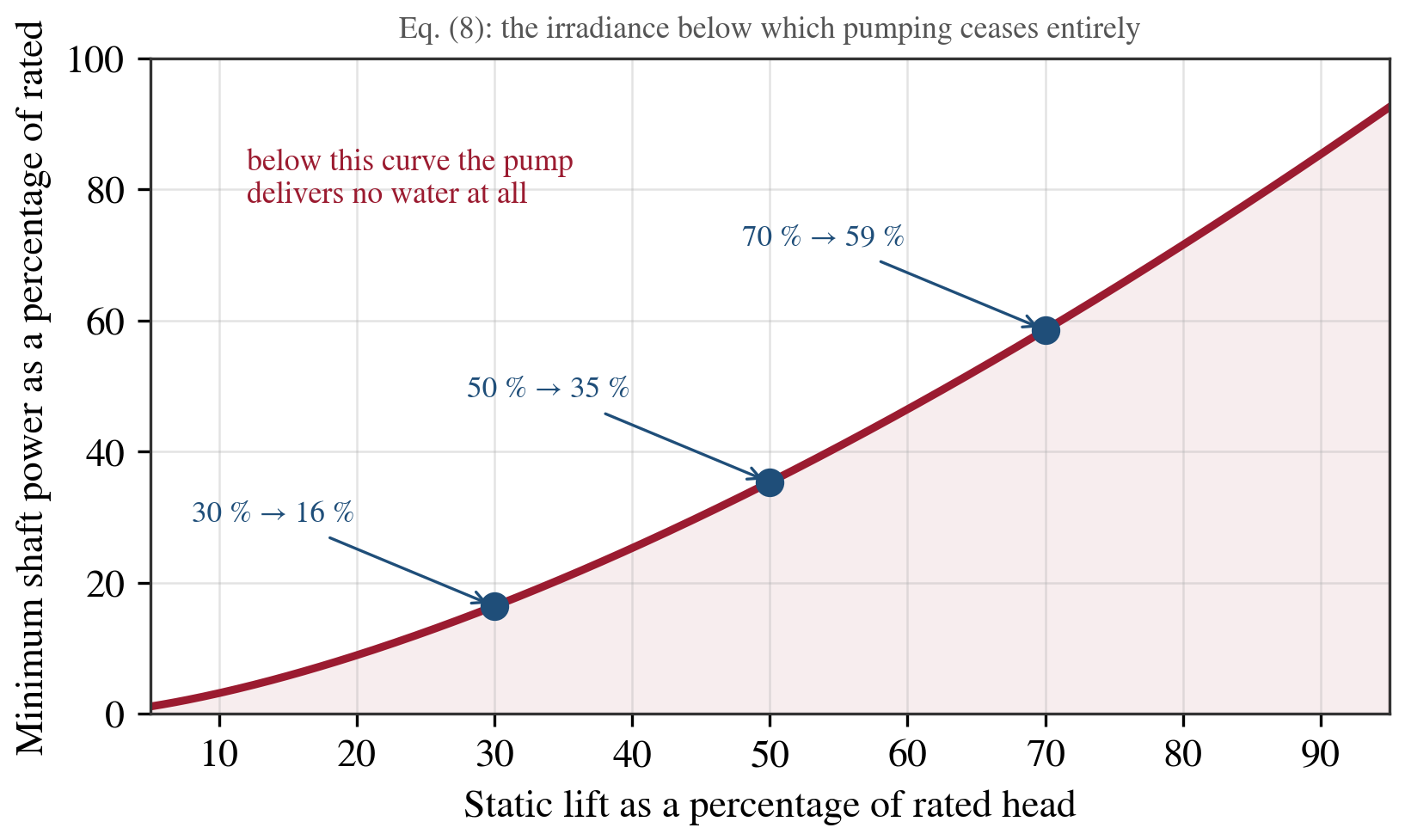
This paper reports the design and hardware realisation of a photovoltaic water pumping system in which a high-gain SEPIC converter conditions the array output, a battery buffers the intermittency of the resource, and a sinusoidal-PWM inverter drives a three-phase induction motor coupled to a centrifugal pump, with a digital signal controller providing the gating. The converter, tracking, drive and hydraulic relations are consolidated, including the affinity laws which explain why such a system continues to deliver water at reduced irradiance rather than simply stopping. The paper is then explicit about a gap that is decisive for this class of system. A water pumping system is judged by the water it delivers, being volume per day against head and the specific energy in watt-hours per cubic metre, yet the campaign recorded no hydraulic quantity whatever: no flow rate, no delivered head, no daily volume and no pumping duration. Nor was any electrical quantity logged at the array, the converter or the motor terminals, so neither conversion efficiency nor drive efficiency can be evaluated, and the high-gain claim in the project's own title is unquantified. This revision develops the affinity argument quantitatively and, in doing so, qualifies it: at half rated shaft power a centrifugal pump delivers 79 per cent of rated flow, which supports the design's case, but the developed head falls to 63 per cent, and since a pump delivers nothing at all once the developed head drops below the static lift, there exists a minimum irradiance below which the system produces no water rather than reduced water. For a static lift at seventy per cent of rated head that threshold is 59 per cent of rated power. The static lift is not stated in the record, so the part-load claim cannot be assessed for this installation. A specific-energy floor is also computed, giving the lowest value physically attainable at a stated head, so that any future measurement has something to be judged against. The ANFIS tracker is identified as not evidenced, the reconfigurability named in the title is found to be undefined, and a four-instrument measurement plan is given.