Investigation of Thermoluminescence Properties of Rare-Earth Doped Phosphor Materials
DOI:
https://doi.org/10.65521/apl.v6i1.4253Keywords:
Abstract
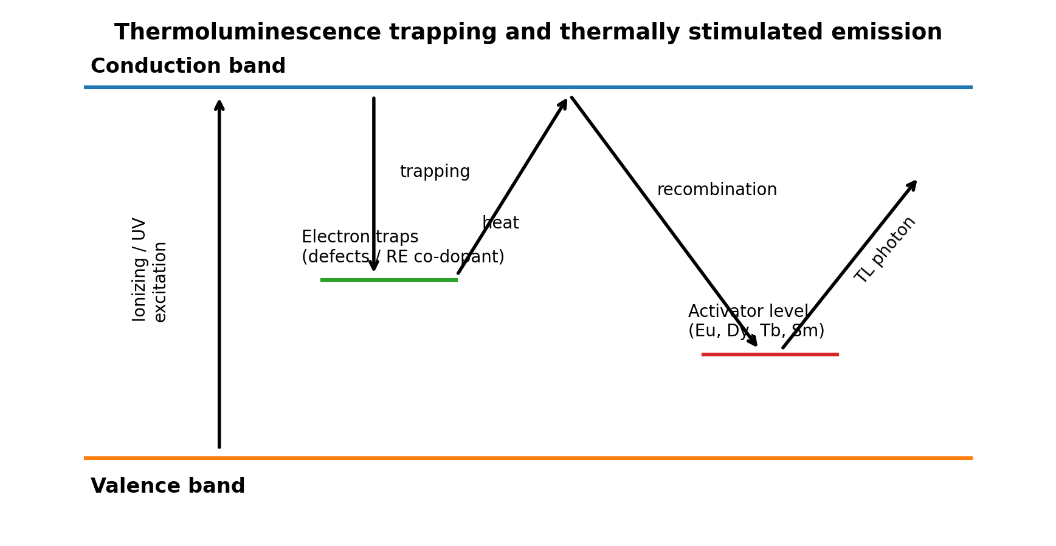
Thermoluminescence (TL) is a defect-mediated luminescence process in which energy stored in an irradiated solid is released as light during controlled heating. Rare-earth ions are particularly useful activators or co-dopants because they introduce luminescent centers and modify the concentration, depth, and stability of charge traps. This methodology paper presents a reproducible experimental framework for investigating the TL behavior of rare-earth doped phosphor materials, with emphasis on europium (Eu), dysprosium (Dy), terbium (Tb), gadolinium (Gd), and samarium (Sm) activated systems. The proposed workflow combines solid-state or solution-assisted synthesis, structural verification by X-ray diffraction (XRD), morphology assessment by electron microscopy, controlled gamma irradiation, TL glow-curve acquisition at fixed heating rates, dose-response and fading tests, and kinetic analysis using peak-shape and computerized glow-curve deconvolution approaches. Literature published up to 2017 shows that rare-earth incorporation can create additional trap levels, shift glow-peak temperature, enhance TL intensity, and improve linearity or reproducibility, although the optimum response is host- and concentration-dependent. The results section therefore reports literature-grounded representative trends rather than claiming new laboratory measurements. The framework is suitable for screening phosphors for radiation dosimetry, persistent luminescence, and defect-physics studies while maintaining clear control of dopant concentration, irradiation dose, and thermal history.