Artificial Intelligence for Traffic and Time Control Optimization Using Sensor-Driven MANET Systems: Trends and Challenges
DOI:
https://doi.org/10.65521/itsi-teee.v13i2.3857Keywords:
Abstract
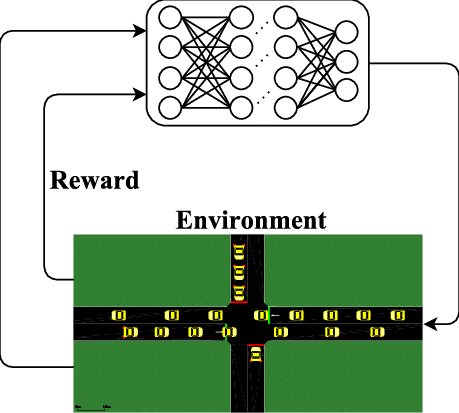
The exponential growth in urbanization and vehicular density has led to severe traffic congestion, inefficient signal timing, and increased environmental pollution. Traditional traffic management systems fail to adapt to dynamic traffic conditions due to their static and rule-based nature. This paper presents a comprehensive review of artificial intelligence (AI)-driven techniques for traffic and time control optimization using sensor-driven transmission systems integrated with Mobile Ad Hoc Networks (MANET) and advanced hybrid models. Recent advancements in Deep Reinforcement Learning (DRL), Graph Neural Networks (GNN), Generative Adversarial Networks (GAN), and metaheuristic optimization algorithms have significantly improved traffic efficiency, adaptability, and decision-making accuracy. The proposed framework incorporates Quaternion Generative Adversarial Kookaburra Optimization Networks (QGAKON) to enhance multi-dimensional feature representation and optimization performance. Sensor networks provide real-time traffic data, while MANET enables decentralized communication, improving system scalability and robustness. This review analyzes studies, highlighting trends, performance improvements, and limitations. The findings indicate that hybrid AI-based architectures outperform traditional and standalone models in reducing congestion, travel time, and energy consumption. However, challenges such as computational complexity, communication latency, and real-world deployment remain. Future research directions emphasize lightweight models, edge computing, and robust communication frameworks for smart city applications