Power-Quality Enhancement in A PV-FED D-STATCOM with LUO-Converter Interface and IoT Parameter Monitoring
Keywords:
Abstract
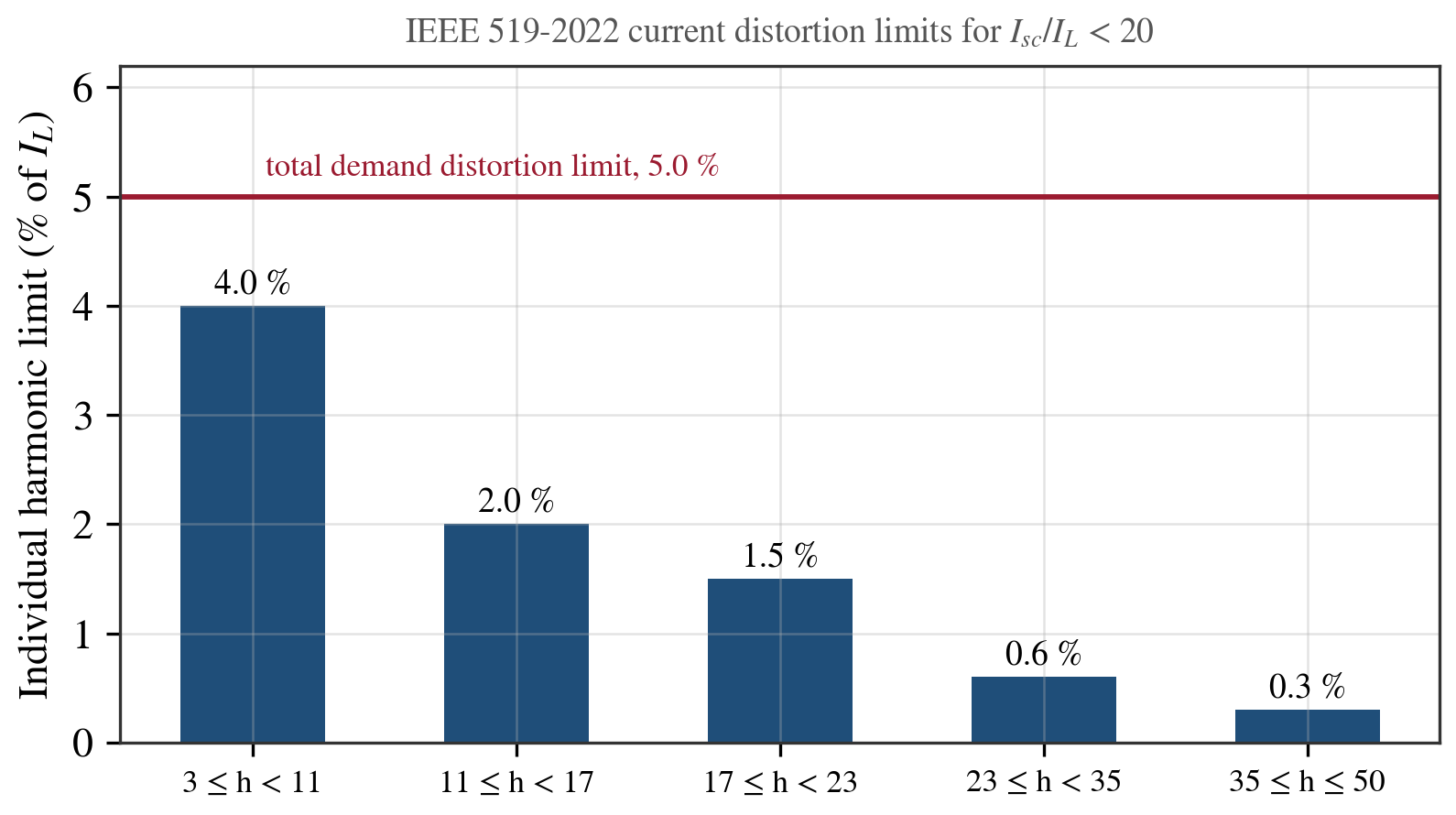
This paper reports the design and hardware realisation of a photovoltaic-fed distribution static compensator intended to improve voltage stability and reduce harmonic distortion at the point of common coupling, with an ESP8266-based node publishing photovoltaic parameters for remote monitoring. The conversion chain, comprising array, positive-output re-lift Luo converter, DC link, voltage-source inverter and shunt coupling, is formalised together with the compensation, tracking and reference-generation relations. The paper then distinguishes carefully between three categories that the source material does not separate. The photovoltaic stage, Luo converter, inverter, shunt branch, and monitoring display were built, while neuro-fuzzy MPPT and recurrent-neural-network reference generation remain design intentions rather than experimentally realised controller blocks themselves. Critically, no electrical quantity was logged at any node: no source-current spectrum, total harmonic distortion, power factor, DC-link transient, array power or tracking-efficiency measurement exists, so the compensation performance the device is built to deliver cannot be evaluated and no value is reported. The voltages of 394 V and 406 V appearing in the record are shown to belong to a cited baseline study of a different topology, not to this prototype, and are relabelled accordingly. This revision adds three elements. The distortion limits the compensator would have to meet are stated from IEEE Std 519-2022 rather than left implicit. The advantage claimed for the re-lift topology is made quantitative: for a tenfold voltage gain the re-lift stage requires a duty ratio of 0.80 against 0.90 for a simple boost, which is the difference between operating inside and outside the region where conduction and reverse-recovery losses dominate. And two reference entries that named no publication are replaced with identifiable sources, one of which establishes the night-time compensation capability the paper proposes to test. A staged measurement plan is specified which separates the converter, the compensator and the tracking algorithm so that any future improvement can be attributed to the block responsible.