Embedded System-Based Home Automation and Security Monitoring Framework
DOI:
https://doi.org/10.65521/ijaeee.v4i1.4565Keywords:
Abstract
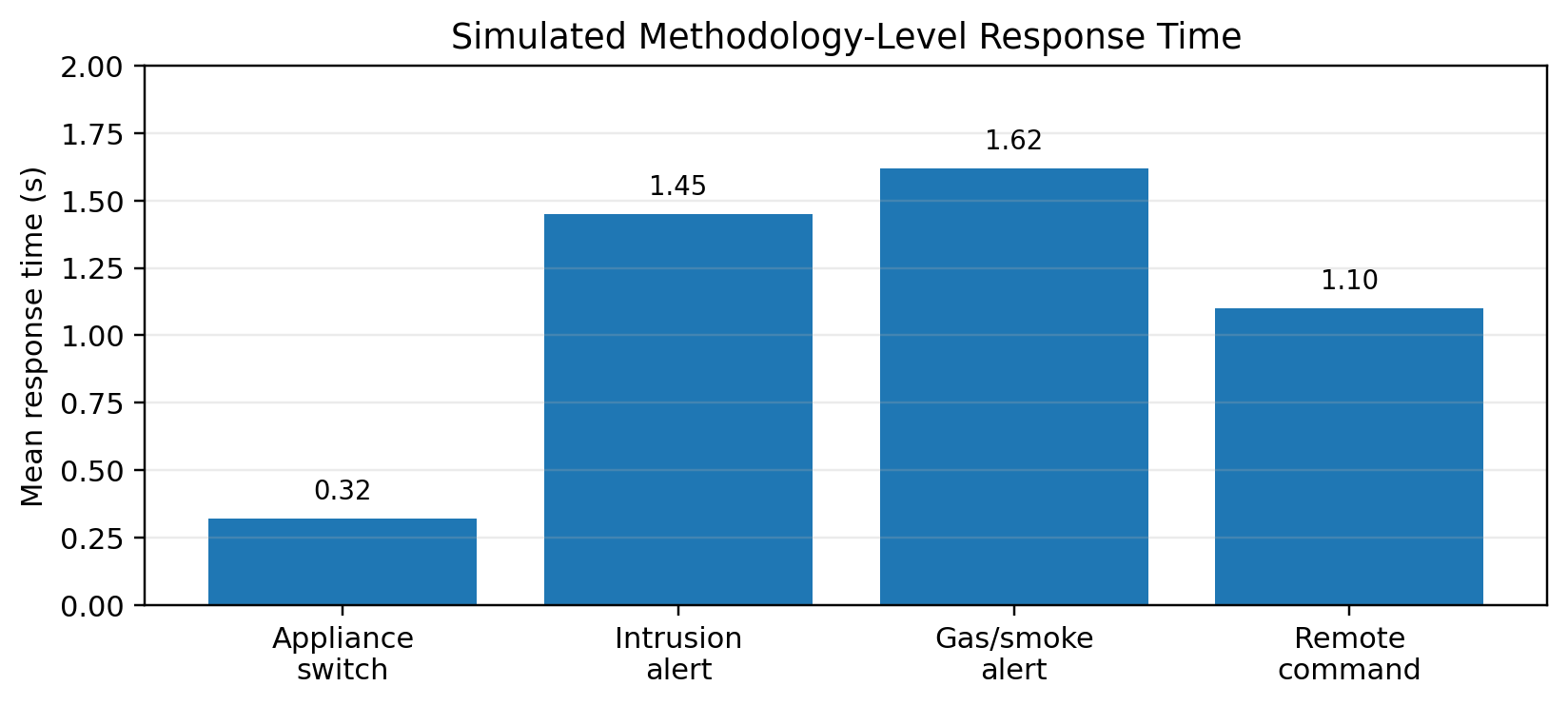
This paper presents a methodology for an embedded system-based home automation and security monitoring framework that integrates appliance control, environmental sensing, intrusion detection, local alarms, and remote notification within a single low-cost architecture. The framework is designed around a microcontroller-class embedded controller interfaced with passive infrared, door-contact, gas/smoke, temperature, and light sensors; relay drivers for electrical loads; a buzzer for immediate warning; and ZigBee/GSM links for local networking and remote user interaction. Unlike automation designs that treat convenience and security as separate subsystems, the proposed method uses event-priority logic so that safety events pre-empt routine appliance commands. The methodology defines hardware selection, sensor calibration, decision rules, communication handling, security checks, and a repeatable validation protocol. A methodology-level software emulation is used to illustrate expected response time, command success, and alarm-delivery behavior without claiming physical laboratory measurements. The framework is intended for residential prototypes where low computational demand, low power consumption, modular expansion, and dependable security notification are primary requirements.