
Experimental Analysis of Forced Convective Drying of Coriander
DOI:
https://doi.org/10.65521/ijtarme.v12i1.3933Keywords:
Abstract
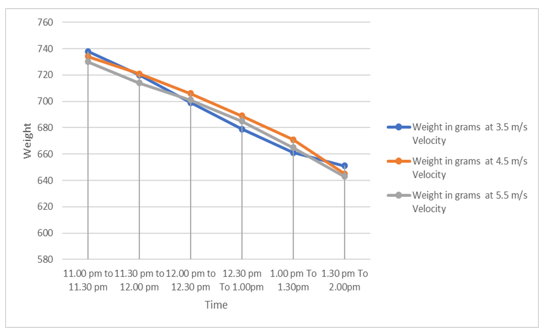
A convection hot air dryer utilizes forced thermal convection to accelerate moisture evaporation from perishable agricultural produce. This study presents a comprehensive experimental investigation and Computational Fluid Dynamics analysis of the forced convective hot air drying characteristics of coriander. The experimental apparatus integrates a wooden drying chamber, an electric heating unit, a centrifugal blower, and a digital mass sensor. Drying performance was systematically evaluated across multiple air inlet velocities at a controlled drying air temperature for different sample batch masses. Three-dimensional steady-state fluid dynamics simulations executed via ANSYS Fluent resolved the internal aerodynamic streamlines, velocity field distributions, and wall pressure contours. Numerical findings revealed stagnation zones within specific regions of the drying chamber where air circulation is severely restricted, while highlighting high-impact stress regions along the wall directly opposing the inlet duct. Experimental mass-loss kinetics demonstrated that elevated air velocities significantly reduce drying time requirements. The integration of computational visualization confirmed that positioning drying trays in parallel alignment with the principal airflow vectors significantly enhances thermal performance and moisture removal kinetics.
Downloads
Published
How to Cite
Issue
Section
License

This work is licensed under a Creative Commons Attribution-NoDerivatives 4.0 International License.
