
Use of Limestone-Calcined Clay (LC3) Cement with Polyethelene Terephthalate Fibre in Concrete
DOI:
https://doi.org/10.65521/intjournalrecadvengtech.v14i1s.863Keywords:
Abstract
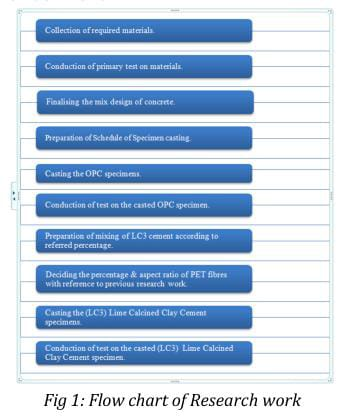
As urban infrastructure demands continue to grow, the evolution of construction materials becomes imperative. This project, titled " An Experimental study on Limestone-calcined clay (LC3) cement with the use of (PET) Polyethylene terephthalate fibres in concrete Road Construction ". Limestone calcined clay cement (LC3) is a new type of low-carbon cement that can reduce energy consumption and carbon dioxide emissions while meeting the performance requirements of ordinary cement. In this study, a specimens were designed for 4 groups of curing ages. The compressive load–displacement data were measured the compressive curve characteristics were analyzed then, a compressive constitutive model of the composites was deduced and obtained.
The results show that, after 28 days, the compressive strength values of LC3 generally decreases with increasing PET fiber content In addition, the specimens showed better properties in terms of toughness, ductility and energy absorption. However, in the microstructures, the addition of PP fibers will cause more internal defects and flaws. This results of this study can provide some theoretical experience and technical support for the engineering application of LC3.
Downloads
Downloads
Published
How to Cite
Issue
Section
License

This work is licensed under a Creative Commons Attribution-NoDerivatives 4.0 International License.
