Integrated Strategies for Improving Urban Air Quality: The Role of Clean Energy, Active Mobility, and Nature-Based Solutions
DOI:
https://doi.org/10.65521/mjret.v13i1.3112Keywords:
Abstract
Walk through the streets of any rapidly expanding city and the haze often hanging in the air serves as a constant reminder of the invisible toll that human activity takes on the atmosphere. As urbanization accelerates worldwide and anthro- pogenic pressures intensify, the quality of the air we breathe continues to decline at a troubling pace. This deterioration threatens not only public health but also long-term environmental sustainability and the capacity of communities to build genuine climate resilience. The challenge is both urgent and multifaceted: how can cities continue to grow while ensuring that the air remains clean enough to sustain healthy lives?
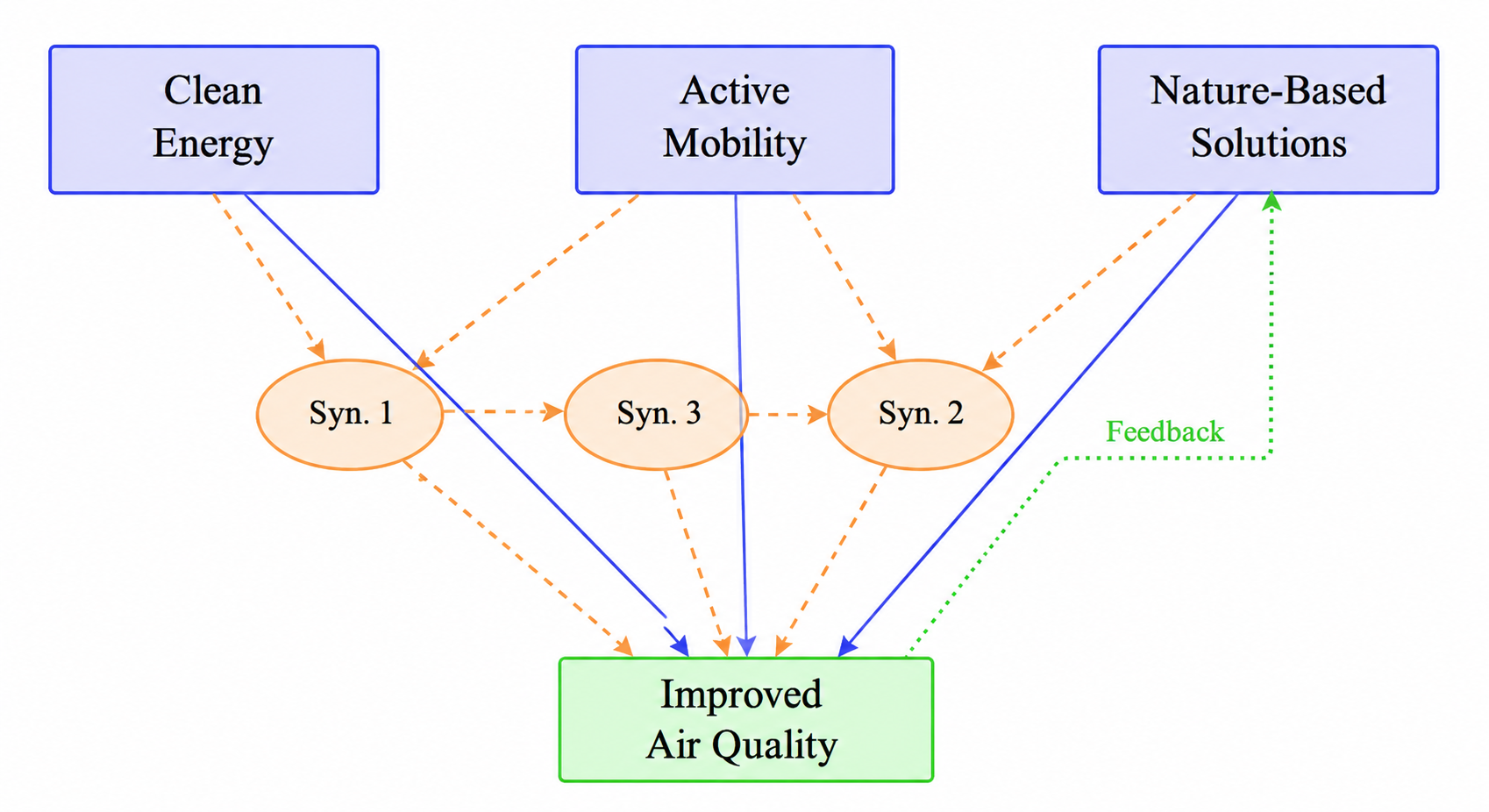
This paper explores three promising pathways toward cleaner urban environments—transition to clean energy sources, pro- motion of active mobility such as walking and cycling, and deployment of nature-based solutions including urban forests and green infrastructure. Rather than treating these approaches in isolation, we investigate how they interact synergistically to produce outcomes that exceed the sum of their individual contributions. Through a systematic literature review, compar- ative evaluation, and simulation-based modeling, each strategy is assessed along six critical dimensions: implementation cost, scalability, environmental impact, time to observable effect, and long-term sustainability.
Our results indicate that, although each strategy carries distinct advantages, an integrated approach combining all three yields the most substantial and durable improvements in air quality. The synergies between clean energy adoption, active transportation infrastructure, and green space development cre- ate reinforcing feedback loops that amplify individual benefits. We present a practical framework for urban planners and policy- makers to prioritize and sequence these interventions according to local conditions, available resources, and community needs, with the aim of guiding cities toward more breathable, livable, and sustainable futures.