Optimization of Machining Parameters in CNC Turning Using Response Surface Methodology
DOI:
https://doi.org/10.65521/ijtarme.v11i1.4431Keywords:
Abstract
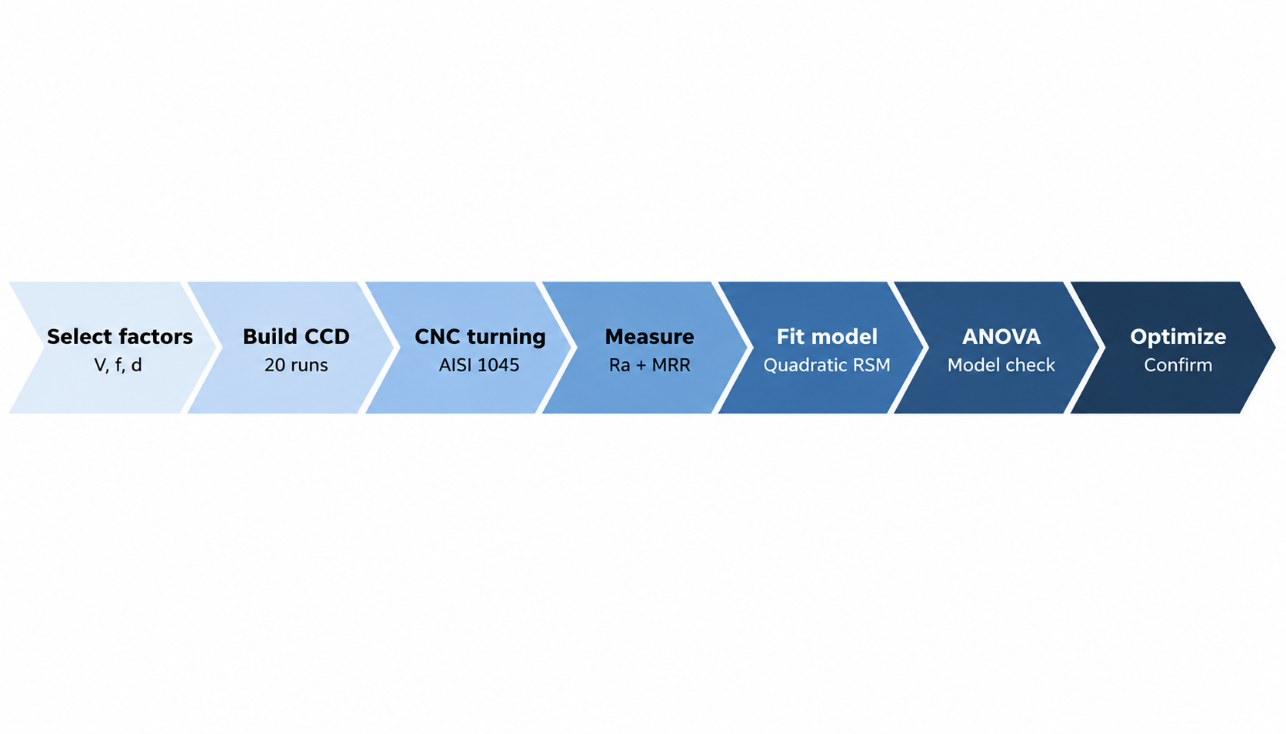
This methodology paper presents a statistically structured approach for optimizing CNC turning parameters using Response Surface Methodology (RSM). The study considers cutting speed, feed rate, and depth of cut as controllable factors and average surface roughness (Ra) and material removal rate (MRR) as performance responses. A central composite design (CCD) is proposed to reduce experimental effort while still estimating linear, interaction, and quadratic effects. AISI 1045 steel machined with a coated carbide insert under dry cutting conditions is used as the representative turning system. The experimental workflow includes specimen preparation, CNC parameter control, roughness measurement, calculation of MRR, second-order regression modeling, analysis of variance (ANOVA), residual diagnostics, numerical desirability optimization, and confirmation testing. Earlier turning studies show that RSM is effective for developing predictive equations and locating optimum cutting conditions, with feed rate frequently emerging as a dominant contributor to surface roughness [1–6]. The paper therefore emphasizes statistical adequacy rather than trial-and-error selection. Representative calculations are included to demonstrate the analysis sequence; they are methodological demonstration values and should be replaced by laboratory measurements when the procedure is implemented. The proposed framework provides a repeatable route for identifying parameter combinations that improve surface finish without unnecessarily sacrificing productivity.