Performance Evaluation of Diesel Engines Using Alternative Biodiesel Fuel Blends
DOI:
https://doi.org/10.65521/ijtarme.v7i1.4388Keywords:
Abstract
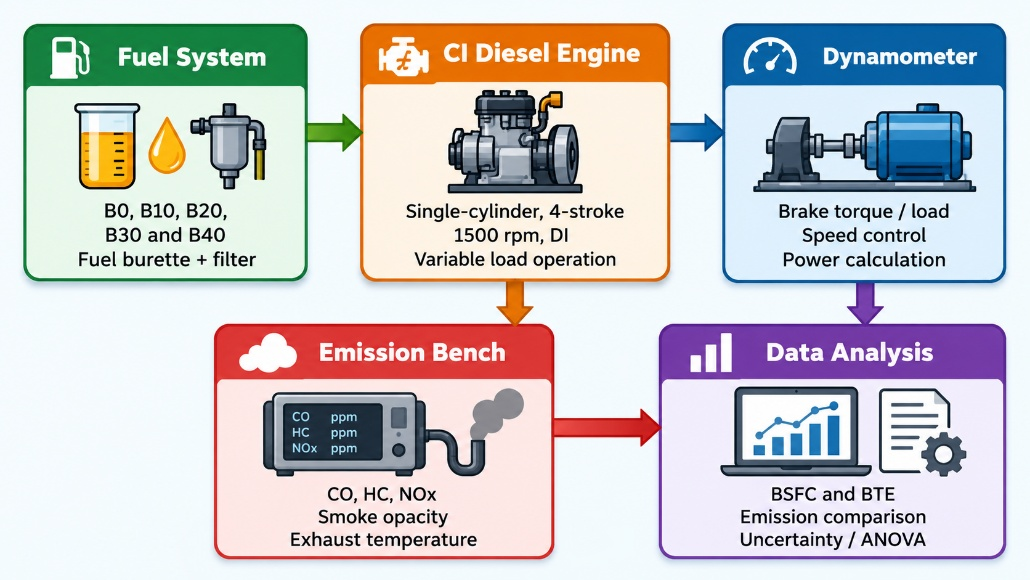
Biodiesel-diesel blending is a practical route for reducing dependence on petroleum fuel while retaining the basic operating architecture of compression-ignition engines. This methodology paper presents a structured experimental procedure for evaluating engine performance and regulated exhaust emissions when conventional diesel (B0) is replaced progressively by alternative biodiesel blends. The proposed protocol uses B10, B20, B30 and B40 fuels prepared on a volume basis and tested in a four-stroke direct-injection diesel engine at constant speed under incremental loading. Fuel density, kinematic viscosity and lower heating value are characterized before engine testing. Brake power, brake-specific fuel consumption (BSFC), brake thermal efficiency (BTE), exhaust-gas temperature and emissions of carbon monoxide (CO), unburned hydrocarbons (HC), nitrogen oxides (NOx) and smoke are then measured. The method includes stabilization, repeated observations, instrument calibration, uncertainty estimation and statistical comparison against the diesel baseline. An illustrative dataset, included only to demonstrate the analysis workflow, shows the commonly reported trade-off: higher biodiesel fraction slightly increases BSFC and may raise NOx, while CO, HC and smoke decline because of the oxygenated nature of biodiesel. B20 gives the most balanced performance-emission outcome in the example analysis. The procedure is designed to be reproducible for biodiesel derived from waste cooking oil or other vegetable/non-edible oils and is consistent with research trends reported up to 2018.