Performance Analysis of Compression Ignition Engines Using Vegetable Oil-Based Biodiesel
DOI:
https://doi.org/10.65521/ijtarme.v4i1.4381Keywords:
Abstract
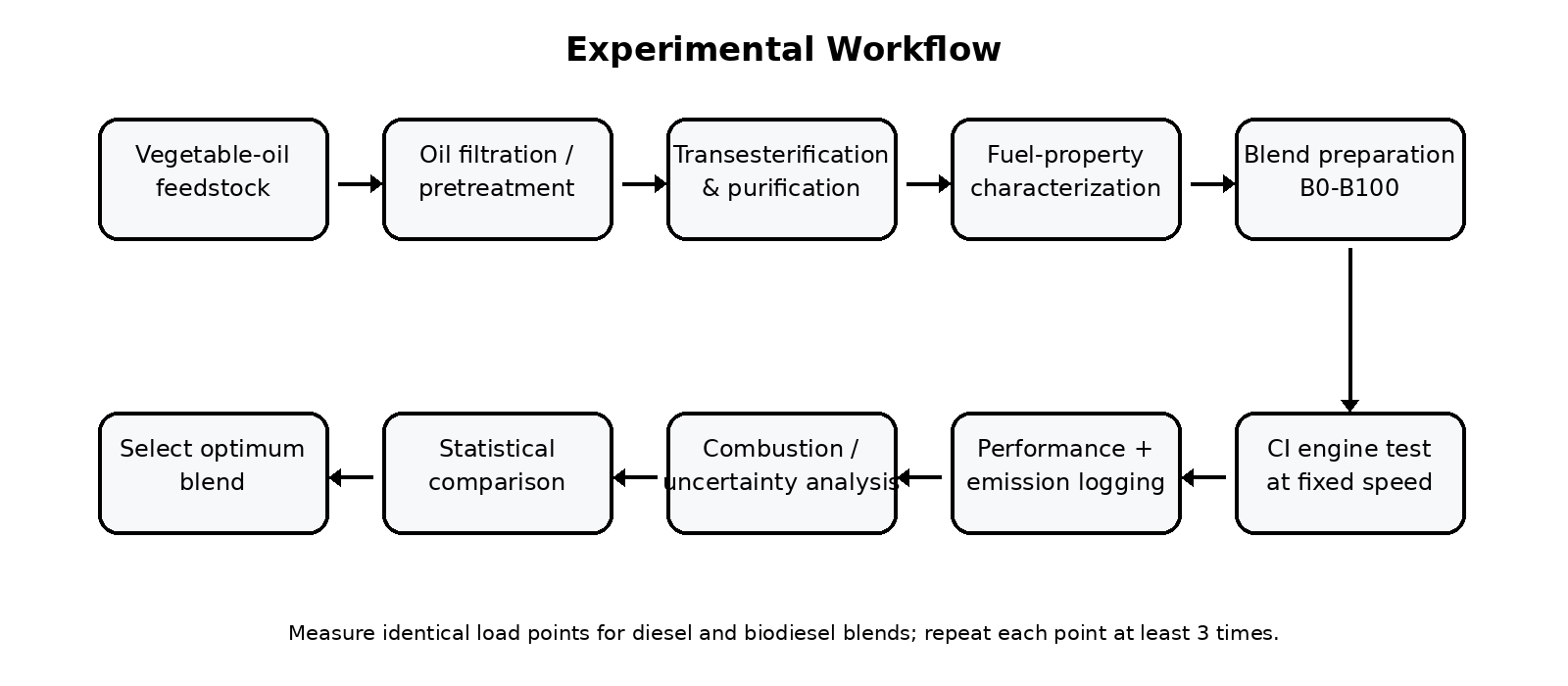
Vegetable-oil-derived biodiesel is a renewable compression-ignition fuel that can be used either neat or as a diesel blend, but its higher viscosity, density and oxygen content and its generally lower heating value alter injection, atomization, combustion and emissions. This paper presents a reproducible methodology for evaluating the performance of a direct-injection compression ignition (CI) engine operated with vegetable oil-based biodiesel. The proposed procedure covers feedstock pretreatment, transesterification, fuel-property characterization, blend preparation, engine testing, data reduction and uncertainty assessment. Diesel and biodiesel blends are compared at identical speed and load using brake thermal efficiency, brake-specific fuel consumption, exhaust-gas temperature, in-cylinder pressure, heat-release behaviour and regulated exhaust emissions. A literature-benchmarked interpretation is included because no original raw test dataset was supplied. Studies published up to 2015 indicate that low-to-moderate biodiesel blends normally maintain diesel-like thermal efficiency while reducing carbon monoxide, unburned hydrocarbon and smoke; higher blends tend to increase specific fuel consumption, and nitrogen oxides may increase depending on feedstock, injection timing and operating condition. The method therefore treats blend ratio and load as the principal factors and identifies the best fuel through a combined performance-emission score rather than a single metric. The resulting framework can be applied to Jatropha, Karanja, rapeseed, waste vegetable oil or similar methyl esters in an unmodified laboratory CI engine.