Performance and Emission Analysis of Compression Ignition Engines Using Biodiesel Blends
DOI:
https://doi.org/10.65521/ijtarme.v6i1.4385Keywords:
Abstract
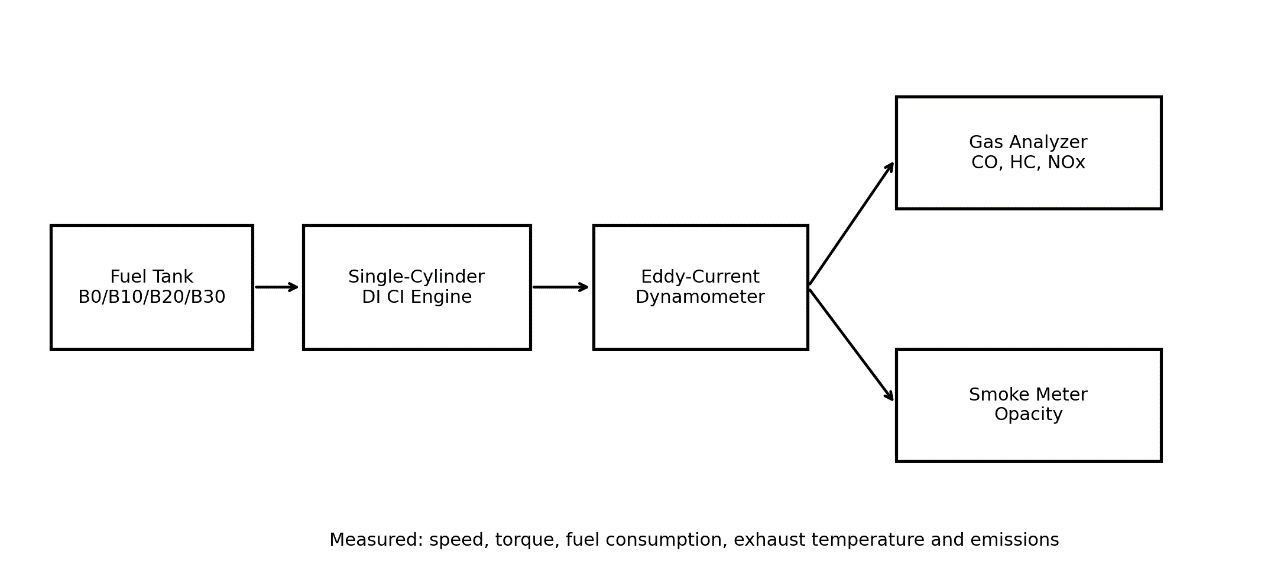
Biodiesel-diesel blends offer a technically practical route for reducing the fossil-fuel dependence and exhaust emissions of compression ignition (CI) engines without major hardware modification. This methodology paper develops an experimental framework for evaluating diesel (B0) and biodiesel blends B10, B20 and B30 in a single-cylinder direct-injection CI engine operated at constant speed and incremental loads. The response variables are braking thermal efficiency (BTE), brake-specific fuel consumption (BSFC), exhaust-gas temperature, carbon monoxide (CO), unburned hydrocarbons (HC), oxides of nitrogen (NOx) and smoke opacity. Fuel properties are first characterized, followed by controlled engine tests using a dynamometer, gas analyzer and smoke meter. Repeat trials, instrument calibration and uncertainty estimation are incorporated to improve reproducibility. Literature up to 2017 consistently indicates that oxygenated biodiesel tends to reduce CO, HC, smoke and particulate emissions, while the lower heating value can increase fuel consumption and NOx may rise depending on feedstock and operating condition. Representative results included here illustrate the expected B20 compromise: small efficiency penalty with meaningful reductions in incomplete-combustion emissions. The proposed procedure provides a compact, repeatable methodology for identifying a blend that balances performance, fuel economy and emission control.