
Advances in Solar-Powered Remote-Controlled Floating Lake Cleaners: A Review of Surface Debris Harvesting Technologies
DOI:
https://doi.org/10.65521/ijtarme.v12i1.3929Keywords:
Abstract
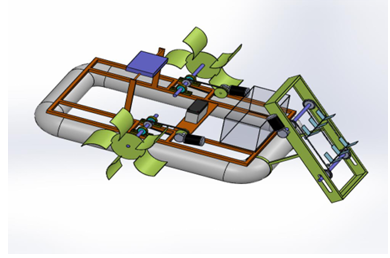
Surface contamination in freshwater bodies caused by unmanaged floating solid wastes such as polyethylene packaging, PET bottles, beverage cans, and organic debris presents severe ecological, economic, and public health threats. Conventional remediation techniques rely primarily on manual netting, which exposes operators to hazardous environments, or heavy fossil-fuel-powered skimmers that incur high operational costs and introduce secondary carbon emissions. To address these challenges, recent research has focused on small-scale, solar-powered, remotely operated surface harvesting vessels. This paper presents a comprehensive review of the design principles, structural considerations, powertrains, and debris intake mechanisms utilized in floating lake cleaning technologies. It highlights the integration of twin-pipe PVC catamaran hulls, 70 inclined chain-conveyor collection assemblies, auxiliary clearing arms, and Bluetooth-based propulsion controls powered by photovoltaic solar panels paired with energy storage units. Structural safety criteria, buoyancy margins, power autonomy, and financial feasibility are synthesized to outline current capabilities and future development vectors in automated freshwater maintenance.
Downloads
Published
How to Cite
Issue
Section
License

This work is licensed under a Creative Commons Attribution-NoDerivatives 4.0 International License.
