
PharmaX-Net: A Unified Hybrid Architecture for Polypharmacy Side-Effect Prediction Using Molecular Fingerprints
DOI:
https://doi.org/10.65521/ijacte.v15i1.3818Keywords:
Abstract
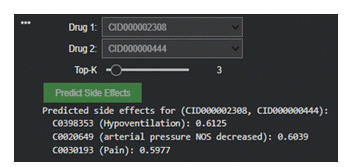
Polypharmacy the simultaneous use of many drugs greatly increases risk of adverse drug reactions (ADRs) which in turn puts a great strain on present health care systems. To date traditional experimental and rule-based approaches have been found to be of limited use in the identification of complex drug drug interactions (DDI) among thousands of drug combinations. To that end this study puts forth a hybrid multi view deep learning framework which we have designed out of Graph Neural Networks, molecular fingerprinting, and SMILES based chemical encoders for very accurate prediction of polypharmacy induced side effects. We used the ChChSe-Decagon polypharmacy data set which we found to be full of relational coverage and which also preserves the rare yet clinical important interactions. We did this by getting features from graph topology, sub structure level chemical fingerprints, and tokenized SMILES which we then jointly learned and put together via an attention-based architecture. The put forth system reports strong predictive performance which in turn also outperforms some single modality baseline models. We have put in an interactive inference module which enables real time Top-k prediction of the most probable side effects for any drug pair thus supporting practical decision making in clinical and pharmaceutical settings. Although we had issues like extreme class imbalance, high dimensional molecular descriptors, and computational complexity we made a hybrid architecture that does a great job of putting together multi modal bio chemical info. The results report that the models which we have put forth do in fact have scale up potential to be used as a computational pharmacovigilance tool which in turn is able to reduce the risk of harmful Drug Drug Interactions and also support early-stage drug safety assessment.
Downloads
Published
How to Cite
Issue
Section
License

This work is licensed under a Creative Commons Attribution-NoDerivatives 4.0 International License.
