
Deepfake Detection Using AI: Techniques, Challenges, and Future Prospects
Keywords:
Abstract
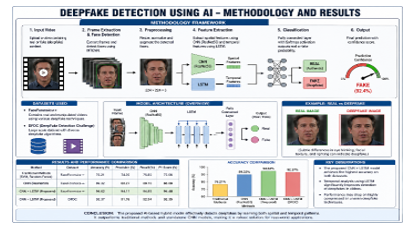
Fake videos made by computers now look almost real. Because of smart software like GANs, spotting these fakes gets harder every day. These false images and sounds can mess with facts online. They shake trust in what people see and hear. One way to fight back involves using similar smart systems designed to catch tricks hidden in video clips. Tools based on CNNs notice tiny flaws in faces or lighting. Others built around RNNs track odd movements across time in recordings. Some methods mix different types together for better results. Yet problems pop up when fakes improve too fast. Limited examples make training tough. Heavy computing needs slow things down. Each hurdle makes detection a moving target. Later on, the study shifts toward live monitoring tools along with moral guidelines for artificial intelligence. What stands out here is how building strong identification methods matters when it comes to believing what we see online.
Downloads
Published
How to Cite
Issue
Section
License

This work is licensed under a Creative Commons Attribution-NoDerivatives 4.0 International License.
