A Survey of Methods and Architectures for Energy Management Strategy for Plug-in Hybrid Electric Vehicles Using Snow Geese Optimization and Relational Bi-level Aggregation Graph Convolutional Network
Keywords:
Abstract
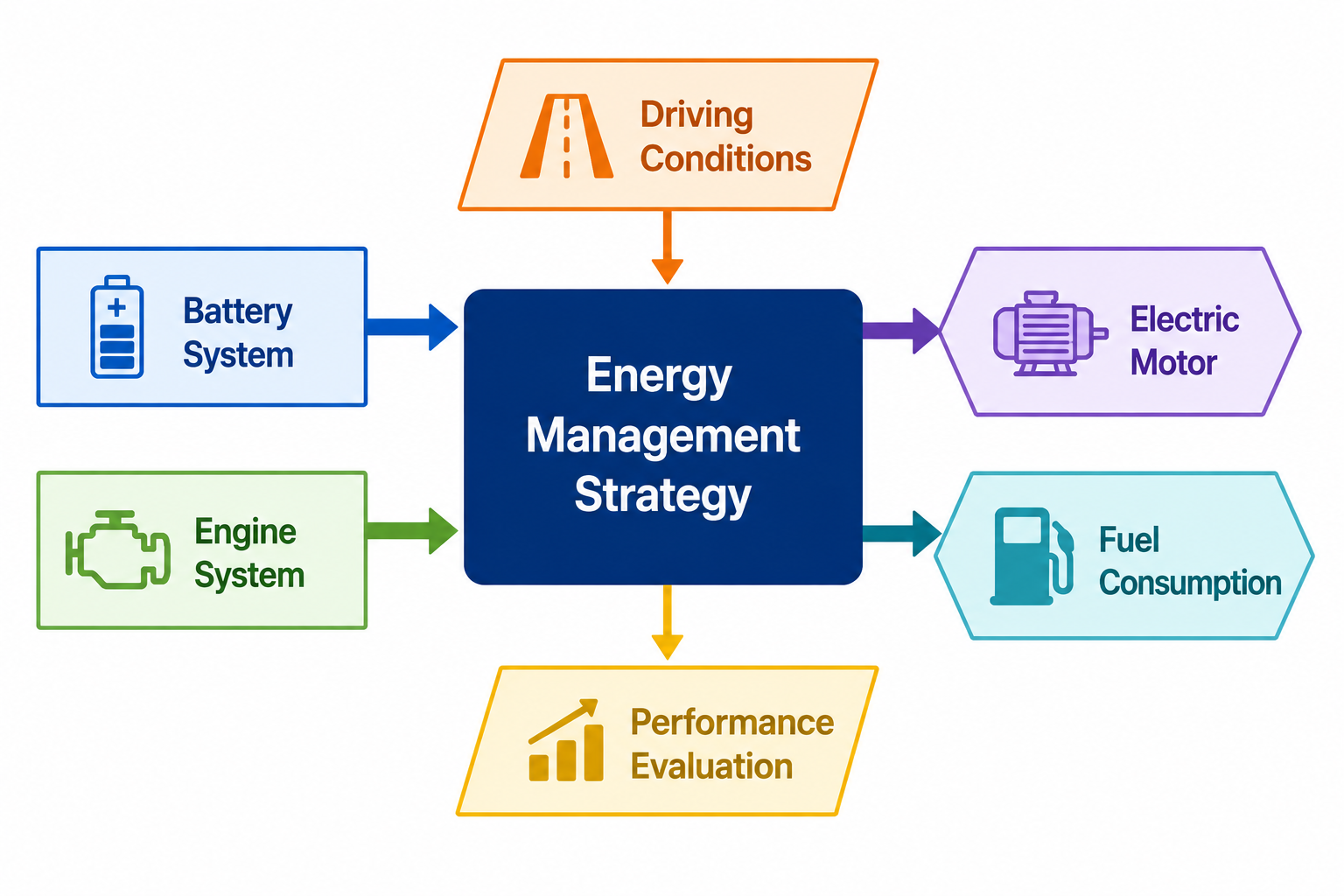
The increasing demand for sustainable and energy-efficient transportation systems has accelerated the development of plug-in hybrid electric vehicles (PHEVs). A critical component influencing the performance of PHEVs is the energy management strategy (EMS), which determines the optimal distribution of power between the internal combustion engine and electric battery. Traditional EMS approaches, including rule-based and optimization-based methods, suffer from limited adaptability and high computational complexity under dynamic driving conditions. Recent advancements have focused on integrating artificial intelligence (AI), deep learning, and metaheuristic optimization techniques to enhance EMS performance. In particular, hybrid frameworks combining Snow Geese Optimization (SGO) with advanced graph-based deep learning models, such as Relational Bi-level Aggregation Graph Convolutional Networks (RBAGCN), have emerged as promising solutions. These approaches effectively capture nonlinear relationships and spatial-temporal dependencies in vehicular and traffic data while ensuring efficient global optimization. This survey presents a comprehensive analysis of recent EMS methodologies developed between 2020 and 2023, highlighting key techniques, architectures, and performance improvements. The study identifies major trends, compares various approaches, and discusses challenges such as computational overhead and real-time implementation. Finally, future research directions are outlined toward developing scalable and intelligent EMS frameworks for next-generation PHEVs.