Impact of Sleep Pattern on Students Academic Performance
Keywords:
Abstract
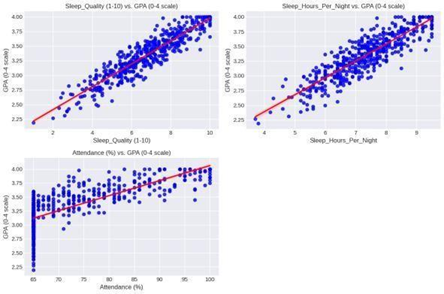
Sleep is a basic need that has a big impact on how well people think, feel, and remember things, especially for young adults. This study looks at how different aspects of sleep like how long you sleep, how well you sleep, and how regular your sleep schedule is can affect the grades of college students, as shown by their Grade Point Average (GPA). A dataset with 500 student records, from Kaggle, was used for this study. The data was cleaned and explored using Python tools. Two types of machine learning models Random Forest and Decision Tree (J48) were used to find out how well sleep factors can predict academic success. The findings show that students who sleep regularly and get around 7 to 8.5 hours of sleep usually do better in school. The Random Forest model was very accurate, with a 97% success rate, showing how strong the link is between sleep and academic performance. These results show how important it is for students to have good sleep habits to improve their school results.