Artificial Intelligence Techniques for Secure Medical Image Cryptanalysis with Quantum Neural Networks for IoT-Enabled Cloud Storage: Trends and Challenges
DOI:
https://doi.org/10.65521/itsi-teee.v12i2.3897Keywords:
Abstract
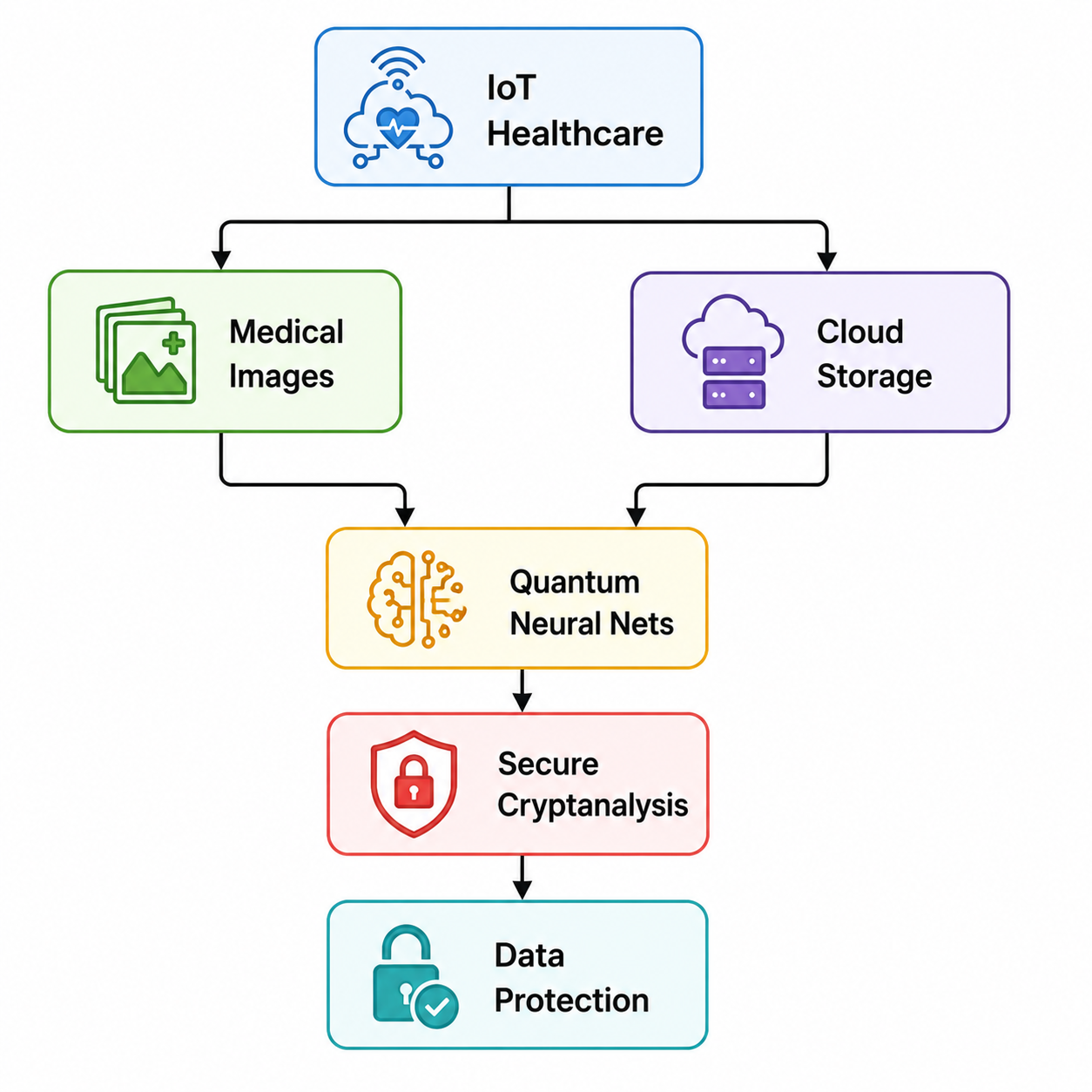
The rapid proliferation of Internet of Things (IoT)-enabled healthcare systems has led to an exponential increase in the generation, transmission, and storage of medical images in cloud environments. While cloud-based storage enhances accessibility and scalability, it introduces critical security challenges such as unauthorized access, data breaches, and cyberattacks. Secure medical image cryptanalysis has therefore become a vital research area, focusing on evaluating and strengthening encryption techniques to protect sensitive healthcare data. Artificial intelligence (AI), particularly deep learning and quantum neural networks (QNNs), has emerged as a transformative approach for enhancing medical image security. Deep learning models enable adaptive encryption, intelligent key generation, and anomaly detection, while QNNs leverage quantum principles such as superposition and entanglement to improve computational efficiency and cryptographic strength. Hybrid approaches combining AI, quantum cryptography, and classical encryption techniques have demonstrated superior performance in ensuring data confidentiality, integrity, and availability. Recent studies highlight the effectiveness of deep learning in medical image cryptography, including applications in encryption, decryption, and secure transmission. These models can learn complex patterns and enhance encryption mechanisms dynamically, improving resilience against attacks. Furthermore, quantum-enhanced frameworks integrating quantum key distribution (QKD) with classical encryption provide robust security against emerging quantum threats. Despite these advancements, challenges such as computational complexity, scalability, and limited quantum hardware availability remain. This paper presents a comprehensive review of AI-driven secure medical image cryptanalysis techniques using QNNs in IoT-enabled cloud storage systems, analysing recent trends (2020–2023), identifying research gaps, and outlining future research directions.