
Role Of Emotional Intelligence In Leadership Effectiveness And Employee Engagement
DOI:
https://doi.org/10.65521/ijrdmr.v10i1.4560Keywords:
Abstract
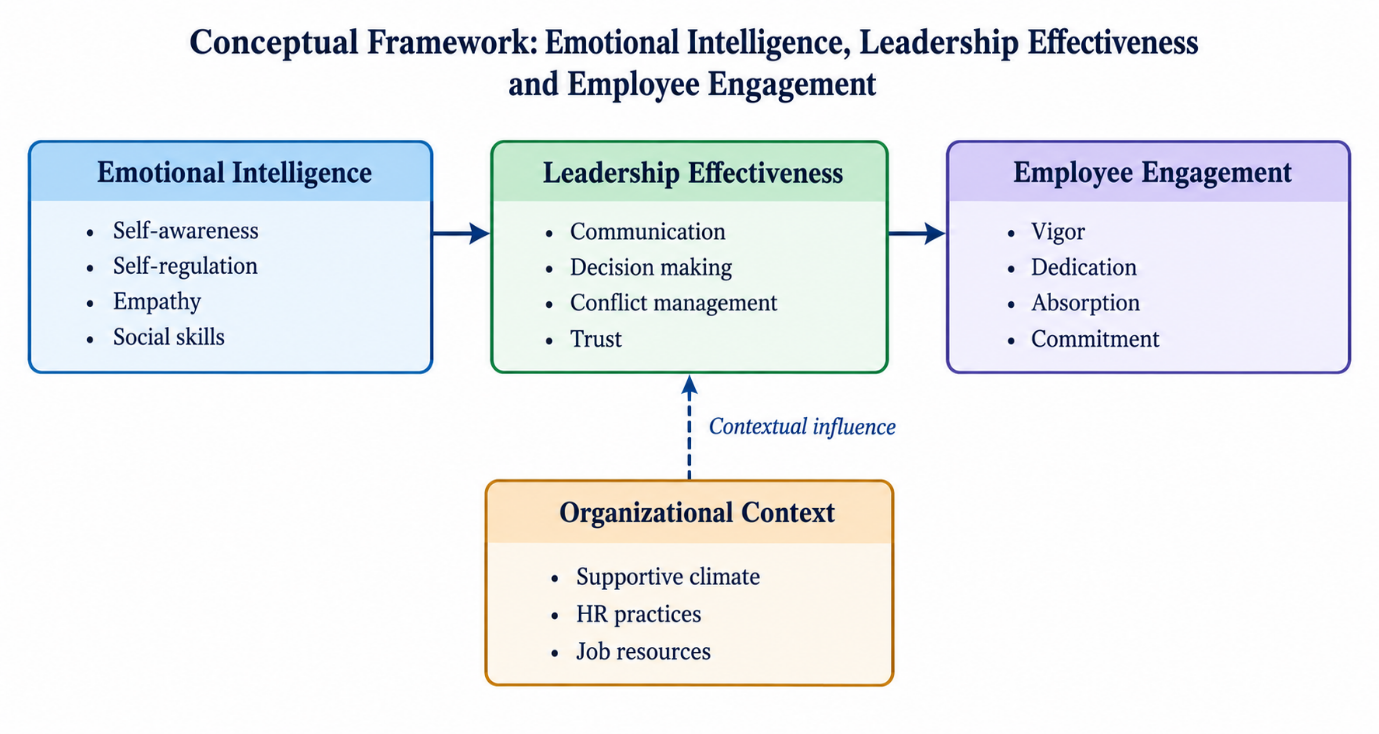
Emotional intelligence (EI) has become an important construct in organizational behavior because leaders routinely manage emotions, relationships, conflict, communication, and employee expectations. This paper examines the role of EI in leadership effectiveness and employee engagement through a structured literature-review methodology. Peer-reviewed studies published from 1998 through 2021 and containing a DOI were considered, with emphasis on empirical studies, meta-analyses, and reviews linking EI with leadership, job attitudes, engagement, or performance. The literature indicates that EI is associated with leadership-related outcomes through mechanisms such as emotion regulation, empathy, relationship management, communication, and trust. Evidence also indicates that EI is related to employee engagement and work attitudes, although the strength of relationships varies by EI model, measurement approach, occupation, and organizational context. The review therefore treats EI as a useful leadership capability rather than as a standalone guarantee of effectiveness. The paper concludes with implications for leadership development, HR practices, employee development, and future research.
Downloads
Downloads
Published
How to Cite
Issue
Section
License

This work is licensed under a Creative Commons Attribution-NoDerivatives 4.0 International License.
