
Effectiveness of Performance Appraisal Systems in Modern Organizations
DOI:
https://doi.org/10.65521/ijrdmr.v5i1.4300Keywords:
Abstract
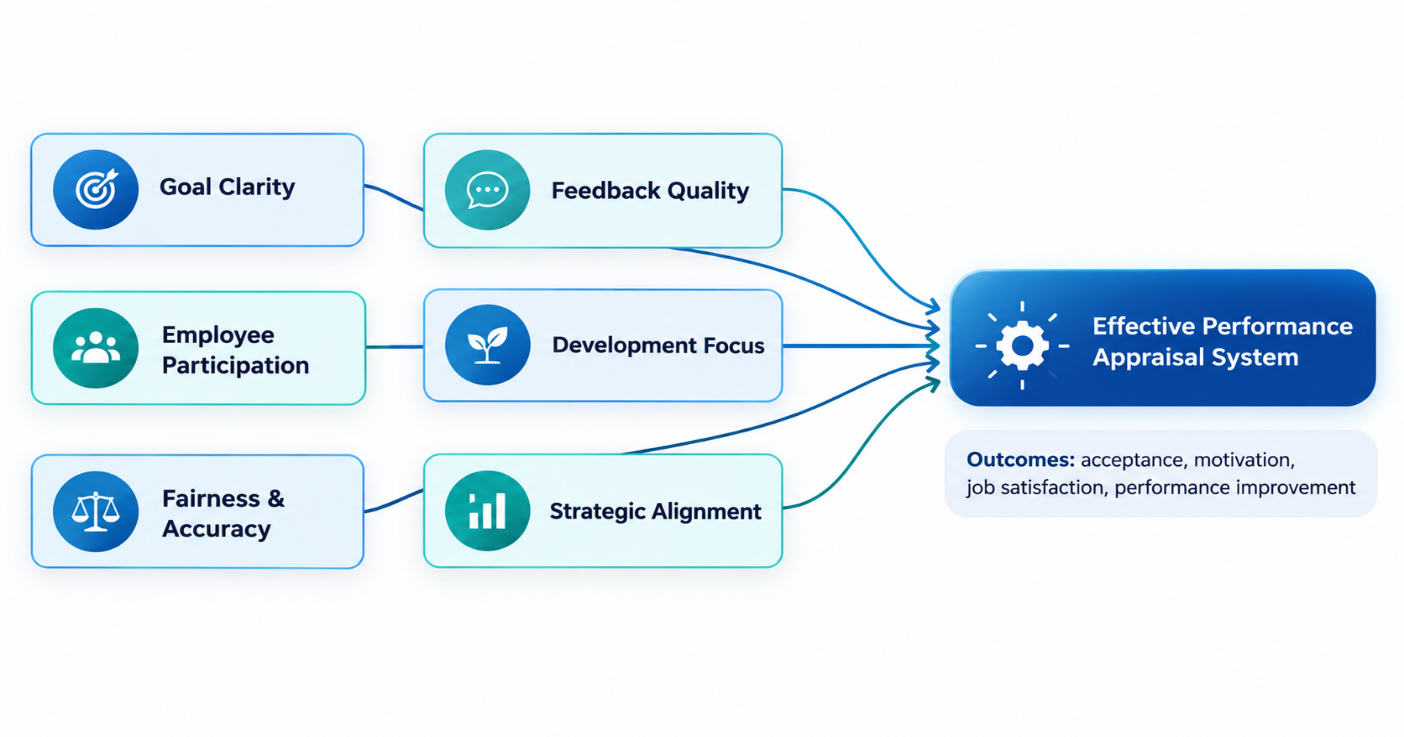
Performance appraisal remains a central human resource practice, yet its effectiveness depends less on the existence of a formal rating form than on how employees experience the process. This methodology-oriented paper evaluates the effectiveness of performance appraisal systems in modern organizations through a structured synthesis of peer-reviewed evidence published up to 2019. The review focuses on appraisal fairness, accuracy, participation, feedback quality, developmental orientation, goal clarity, and strategic alignment as core determinants of appraisal effectiveness. A structured literature review design was adopted, with studies selected when they examined performance appraisal or performance management effectiveness and reported employee, managerial, or organizational outcomes. Evidence was organized using a thematic coding framework and compared across conceptual, meta-analytic, and empirical studies. The synthesis indicates that effective appraisal systems are characterized by transparent standards, employee voice, credible raters, continuous and developmental feedback, and clear links between individual goals and organizational priorities. Studies also show that appraisal reactions—especially perceived fairness and satisfaction—are important mechanisms connecting appraisal practices with motivation, commitment, job satisfaction, and performance improvement. The paper concludes that modern organizations should treat appraisal as a continuing performance-management conversation rather than an isolated annual administrative event. The proposed framework offers a practical basis for designing, auditing, and improving appraisal systems while remaining grounded in evidence available through 2019.
Downloads
Downloads
Published
How to Cite
Issue
Section
License

This work is licensed under a Creative Commons Attribution-NoDerivatives 4.0 International License.
