
Sustainable Supply Chain Orchestration: Integrating Digital Technologies, Green Practices, and Organizational Resilience for Competitive Advantage
DOI:
https://doi.org/10.65521/ijrdmr.v9i1.4278Keywords:
Abstract
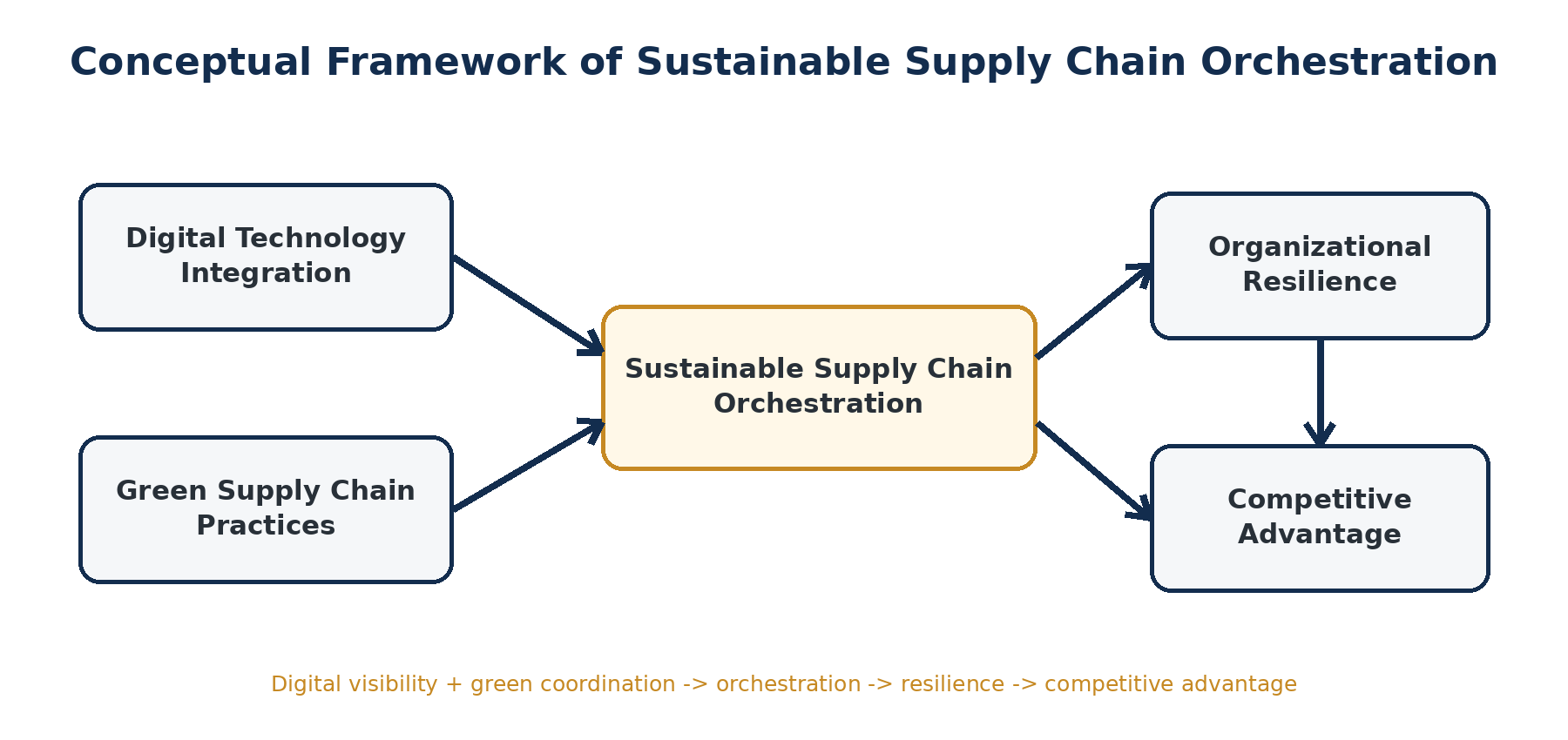
Sustainable supply chain management has become a strategic priority as organizations increasingly face environmental pressures, digital disruption, market uncertainty, and the need for resilient operational systems. This study examines Sustainable Supply Chain Orchestration (SSCO) by integrating digital technologies, green supply chain practices, and organizational resilience as complementary capabilities for achieving competitive advantage. The proposed framework investigates how technologies such as big data analytics, Internet of Things, cloud computing, automation, and digital information systems can improve supply chain visibility, coordination, and decision quality while supporting environmentally responsible practices. Green supply chain practices, including sustainable procurement, eco-design, waste reduction, reverse logistics, and resource efficiency, are considered important mechanisms for reducing environmental impact and improving operational sustainability. Organizational resilience is incorporated as a strategic capability that enables firms to anticipate disruptions, adapt to changing conditions, recover from shocks, and maintain continuity across supply chain networks. The study proposes a quantitative methodology using survey data collected from supply chain, operations, logistics, procurement, and sustainability professionals. Structural Equation Modelling is proposed to test the relationships among digital technology integration, green practices, sustainable supply chain orchestration, organizational resilience, and competitive advantage. The framework contributes to supply chain literature by integrating technological, environmental, and resilience perspectives within a unified model.
Downloads
Downloads
Published
How to Cite
Issue
Section
License

This work is licensed under a Creative Commons Attribution-NoDerivatives 4.0 International License.
