
Approach To Health, Well-Being, And Inner Balance
DOI:
https://doi.org/10.65521/ijrdmr.v11i1.4007Keywords:
Abstract
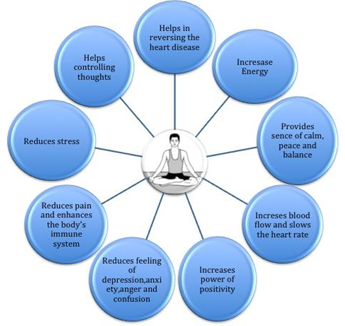
Yoga education emphasizes the balanced development of the mind, body, and spirit. By combining physical postures with mental discipline, yoga promotes calmness, reduces stress and anxiety, and encourages relaxation. Shapiro (1982) explains meditation through the concept of attention, defining it as a technique that minimizes analytical thinking and effort, allowing the mind to move away from continuous, discursive thought. These practices can take many forms, such as sitting quietly while focusing on breathing, repeating a mantra, or concentrating on a simple internal or external object. Yoga extends beyond religious boundaries and is widely recognized as a path toward harmony and unity. The philosophy of “Yoga in Daily Life” guides spiritual seekers in shaping their lifestyle through practices like Mantra Yoga and Kriya Yoga. Additionally, it enhances flexibility, muscle strength, and body posture, while improving breathing patterns and overall energy levels. Although yoga may appear to be simple stretching, its effects reach much deeper, influencing how individuals feel, move, and function. This paper highlights the importance of yoga and meditation in daily life, particularly for maintaining mental and physical health.
Downloads
Downloads
Published
How to Cite
Issue
Section
License

This work is licensed under a Creative Commons Attribution-NoDerivatives 4.0 International License.
