
Recipe Generator: A Lightweight Transformer-Based Approach Using SentencePiece Tokenization
DOI:
https://doi.org/10.65521/intjournalrecadvengtech.v15i1.2066Keywords:
Abstract
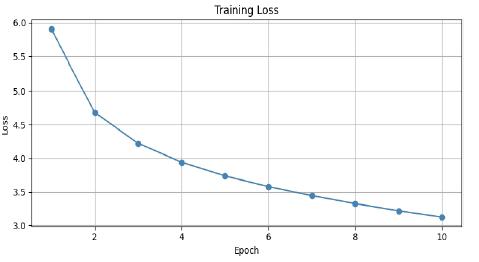
Auto-generation of recipes is on the border of structured knowledge and open-ended language generation. The following paper introduces a light-weight encoder-decoder trans- former that is trained on a instruction-conditioned recipe dataset, in which SentencePeice tokenization can be effective to process culinary words. In the event a user query is a short query, which includes specifications on the type of cuisine, remodel produces a step- by- step cooking instructions. It is a model architecture, training process, evaluation process and a quantitative case study tour. Findings indicate that there are no changes in training and average BLEU scores, which proves that a smaller model is capable of producing useful recipes at a tenth of the computation cost. We also address the existing constraints.
Downloads
Downloads
Published
How to Cite
Issue
Section
License

This work is licensed under a Creative Commons Attribution-NoDerivatives 4.0 International License.
