An Off-Grid Photovoltaic Node with Remote Load Control for Remote Communities
Keywords:
Abstract
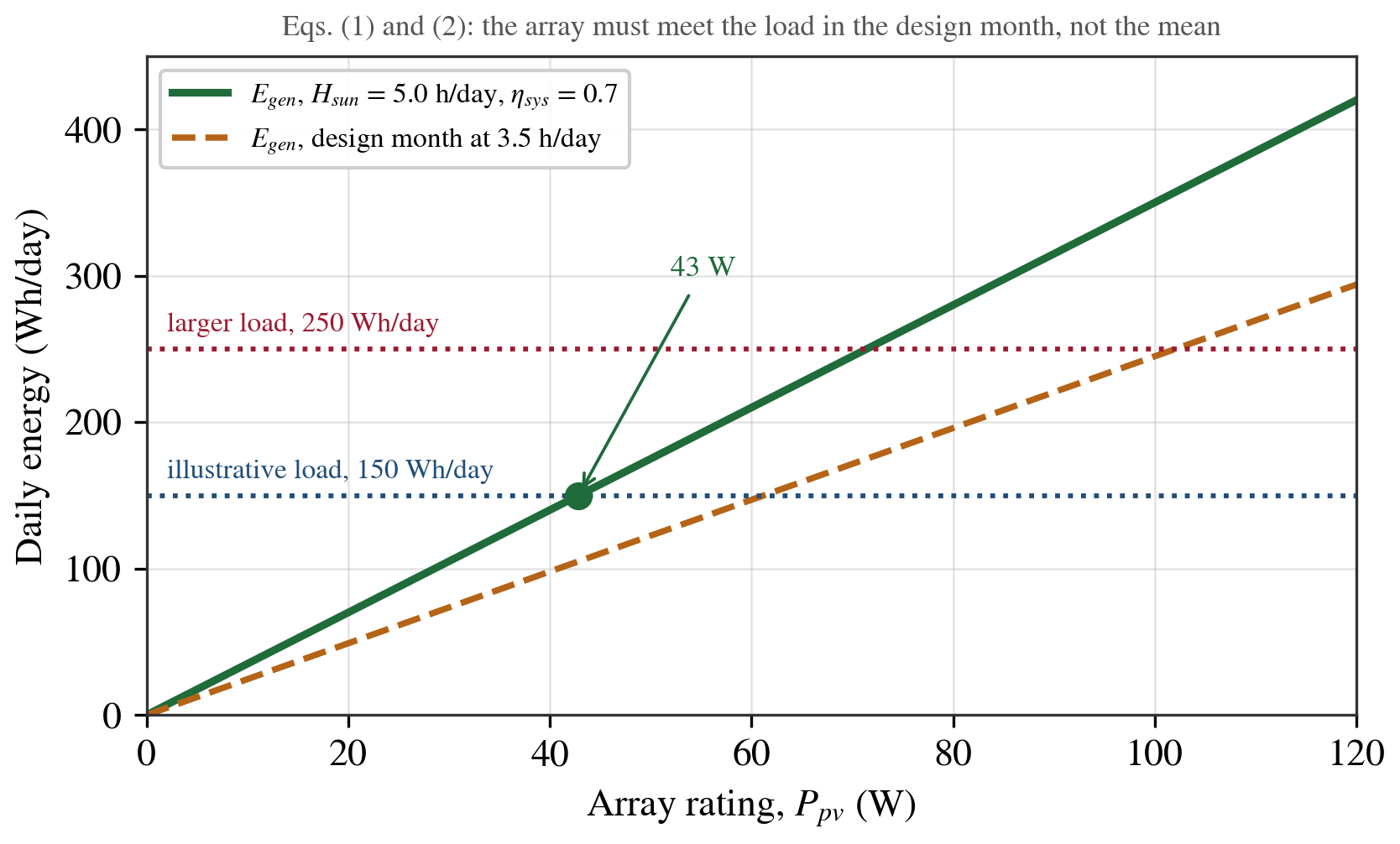
This paper reports an off-grid photovoltaic supply node with environmental sensing and remotely commanded loads, built to demonstrate the control and monitoring layer of a stand-alone electrification scheme for remote communities. A photovoltaic panel charges a 12 V battery, a linear regulator supplies an ESP8266 controller, and a temperature sensor and an infrared proximity sensor feed the controller, which switches a lamp and a fan through transistor-driven relays and publishes all channels to a cloud dashboard. The recorded telemetry is reported exactly as captured: a single snapshot showing 34 degrees Celsius, 76 % relative humidity and both switched loads in the OFF state, together with the demonstrated remote switching of lamp and fan. The assessment then states plainly what such a record supports. No electrical quantity was logged anywhere in the chain, neither panel voltage nor current, neither battery voltage nor state of charge, nor load current, so generation, load energy, autonomy and system efficiency are all indeterminate; and the panel and battery ratings are not documented in the source material, so the installation cannot even be sized retrospectively. This revision strengthens the sizing analysis in two ways. The peak-sun-hours figure used in the worked example is replaced by a sourced resource value for the district in which the work was carried out, of the order of 5.0 kWh per square metre per day, so the example is anchored rather than assumed. And the sizing is then evaluated across a range of design-month resource values rather than at the annual mean, showing that an array sized on the mean is undersized by roughly a quarter to two fifths for a poorer month, which is the failure mode that leaves an off-grid household in the dark. The paper consolidates the generation, load-energy, autonomy and days-of-storage relations that determine whether such a node can actually serve a household, and separates the demonstrated control function from the socio-economic outcomes claimed in the source design, which no measurement in this campaign can support and which are therefore reported as project rationale rather than as findings.