A Smart Sanitary Waste-Management Node
Keywords:
Abstract
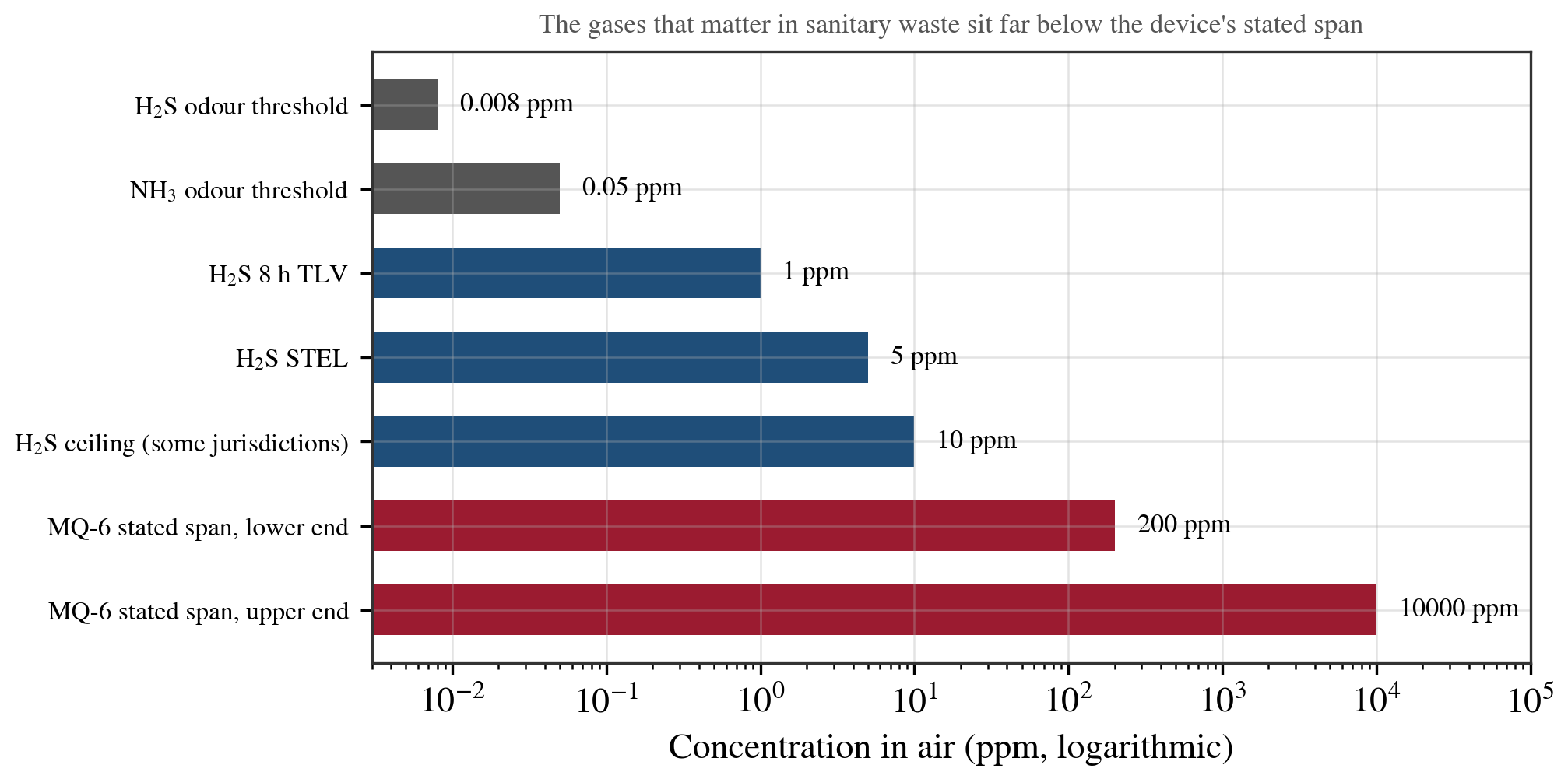
This paper reports an Internet-of-Things node for sanitary waste bins, comprising a gas sensor, a temperature and humidity sensor and an ESP8266-based controller which drives an exhaust fan and an audible alarm and publishes bin conditions to a mobile dashboard. The node's architecture, sensor response relations and alerting path are documented, and the operating principle of odour and decomposition monitoring in enclosed waste containers is formalised. The paper then audits the sorting claim that the project title carries, and reports three findings. First, the documented block diagram contains gas, temperature and humidity sensors driving a fan, an alarm and a mobile application; it contains no servo motors, no bin-selection mechanism, no tipping actuator and no fill-level sensor, so the automatic segregation and disposal functions described in the text are not evidenced in the hardware as documented. Second, gas and humidity sensing can in principle separate wet organic waste from dry waste, but carries no information capable of distinguishing metal, plastic and glass, the categories the project's own problem statement sets out, so the sensor set is not sufficient for the material sorting claimed regardless of implementation. Third, no measurement of any kind was recorded: no gas concentration, no classification accuracy, no fill level and no alert latency, so the system's performance is entirely indeterminate and no figure is reported. This revision adds a quantitative dimension to the second finding. The gases that matter in sanitary waste are hydrogen sulphide and ammonia, which become a health concern at single-figure parts per million and are perceptible far below that, whereas the fitted device's stated detection span begins at 200 ppm for a different target gas; the sensor is therefore mismatched to the application by roughly two orders of magnitude in range as well as in selectivity. The ventilation relations are also evaluated at bin scale, showing that dilution is fast and that the binding question is the steady-state balance against generation rate, which was not measured. Substantial passages of the source material describing pipeline leak detection and oil-level monitoring with a valve-closing relay are identified as belonging to a different project and excluded. A measurement plan and a corrected scope statement are given.