A Survey of Methods and Architectures for Optimizing Electric Vehicle Charging with Parallel Convolutional Neural Network: Coordinating Smart Grids and Intelligent Transportation Systems
DOI:
https://doi.org/10.65521/ijacte.v12i2.3836Keywords:
Abstract
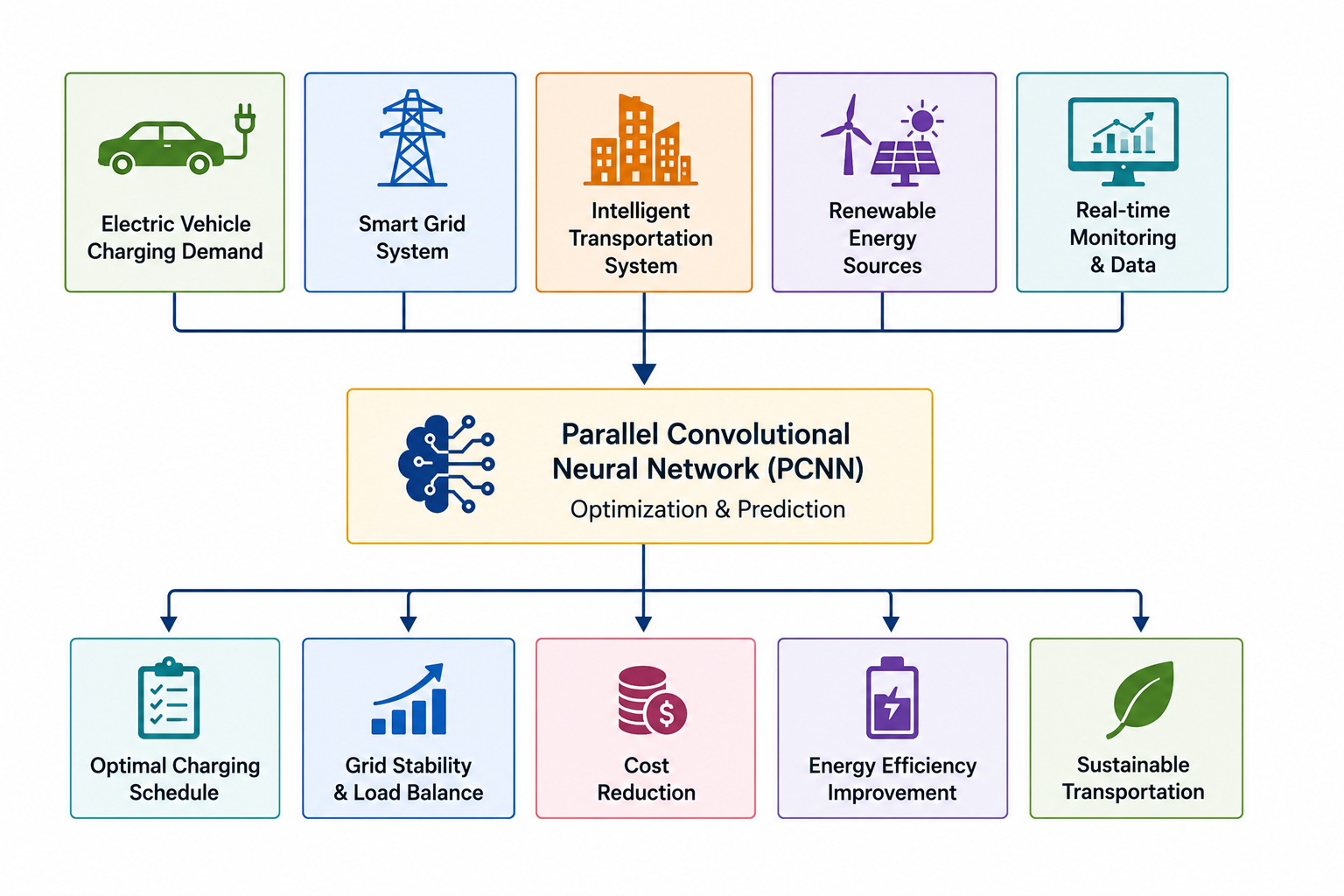
The rapid adoption of electric vehicles (EVs) has introduced significant challenges in managing charging demand, grid stability, and energy efficiency. Smart grids and intelligent transportation systems (ITS) play a crucial role in enabling coordinated EV charging solutions. This paper presents a comprehensive survey of methods and architectures for optimizing EV charging using advanced artificial intelligence techniques, particularly parallel convolutional neural networks (PCNN). The integration of machine learning, deep learning, and optimization algorithms has significantly improved charging scheduling, load balancing, and energy management in EV ecosystems. Recent studies demonstrate that hybrid models combining optimization algorithms with AI approaches provide better scalability, adaptability, and efficiency in real-time charging scenarios. This survey focuses on literature published recently, analysing 30 key studies and categorizing them based on methodologies such as traditional optimization, machine learning, deep learning, and hybrid approaches. A comparative analysis highlights the strengths and limitations of each technique. The findings reveal that PCNN-based architectures, when integrated with smart grid technologies, enable improved prediction accuracy, reduced charging cost, and enhanced grid reliability. Furthermore, this paper identifies key research gaps, including high computational complexity, lack of real-time deployment, and limited integration of transportation systems with energy networks. Future research directions emphasize lightweight AI models, multi-objective optimization, and real-time adaptive control frameworks for sustainable EV charging infrastructure.