A Comprehensive Review of Segmentation and Classification of White Blood Cancer Cells in Bone Marrow Microscopic Images Using Deep Kronecker Neural Networks
DOI:
https://doi.org/10.65521/ijacte.v13i2.3785Keywords:
Abstract
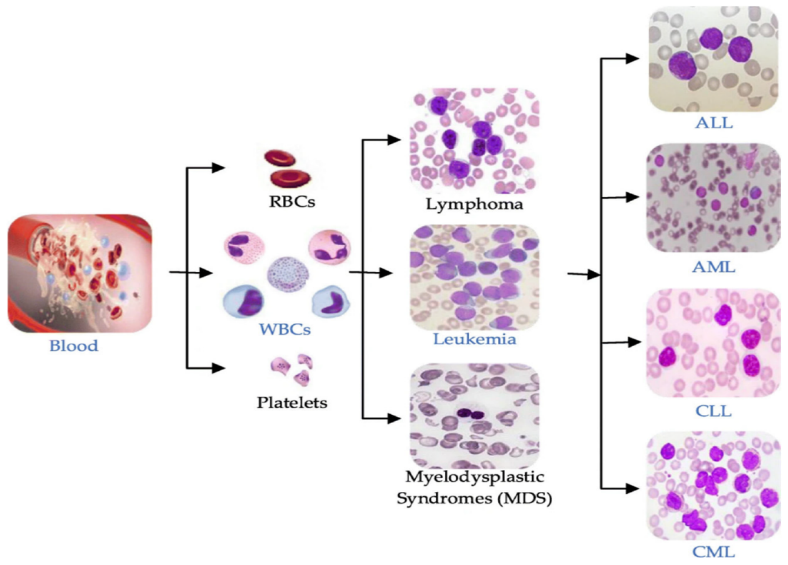
The detection and classification of white blood cancer cells, particularly leukemia, from bone marrow microscopic images are essential for early diagnosis and effective clinical decision-making. Traditional manual diagnostic approaches are labor-intensive, time-consuming, and prone to human error, creating a need for automated and reliable systems. Recent advancements in deep learning have significantly improved the accuracy of leukocyte segmentation and classification. This review focuses on state-of-the-art approaches, including convolutional neural networks (CNNs), U-Net-based segmentation models, transformer architectures, and emerging Deep Kronecker Neural Networks (DKNNs). CNN-based methods provide strong baseline performance, while U-Net variants enable precise segmentation of white blood cells in complex microscopic environments. Hybrid and attention-based models further enhance feature extraction and classification accuracy. Deep Kronecker Neural Networks offer a promising direction by efficiently modeling high-dimensional feature interactions with reduced computational complexity. Despite significant progress, challenges such as overlapping cells, staining variability, class imbalance, and limited datasets persist. This review presents a comprehensive analysis of existing methods, comparative evaluation, and future research directions aimed at developing robust, efficient, and clinically deployable leukemia detection systems.