
A Guide to Safe Vehicle Ad Hoc Networks: Perspectives and Analogies
DOI:
https://doi.org/10.65521/ijacte.v15i1S.1332Keywords:
Abstract
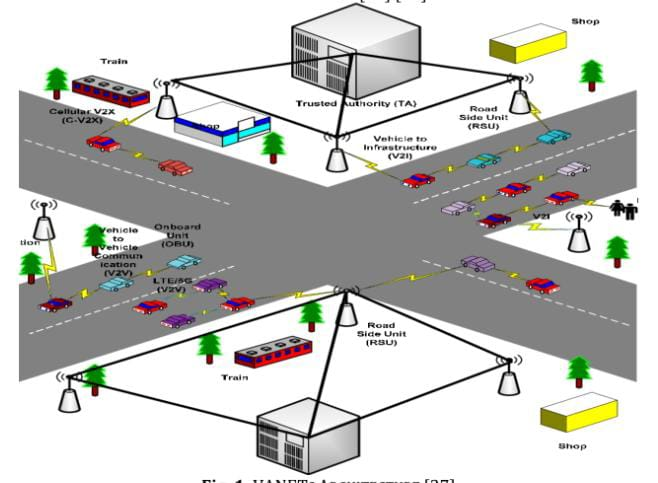
Concerningly, traffic accidents have been on the rise globally, resulting in significant human and material losses. This highlights the critical need for creative and effective solutions to address this issue. A new wireless communication technology called Vehicular Ad Hoc Networks (VANETs) has recently gained a lot of attention from researchers because of its potential to improve traffic management and road safety. Nevertheless, in spite of these advantages, VANETs have considerable security concerns. Their essentially open and dynamic traits make them especially susceptible to numerous harmful threats, endangering the network's reliability and the users' safety. Establishing robust security mechanisms is essential for developing resilient and reliable VANET systems that can effectively mitigate threats and safeguard network integrity. An overview of vehicle ad hoc networks (VANETs), together including its design and salient features, is given in this study. It explores the primary security issues VANETs face and underlines the essential need of a safe network environment. The study investigates important security concerns and how they impact VANET integrity in order to underline the shortcomings threatening this integrity. Viewing these hazards, this work looks at and assesses some possible countermeasures. Organizing several security solutions into groups and carefully evaluating them helps one to determine which ones are most appropriate for particular security issues.
Downloads
Published
How to Cite
Issue
Section
License

This work is licensed under a Creative Commons Attribution-NoDerivatives 4.0 International License.
