
Comparative Study of Deep Learning Methods for Thyroid Cancer Detection
DOI:
https://doi.org/10.65521/ijacte.v15i1S.1317Keywords:
Abstract
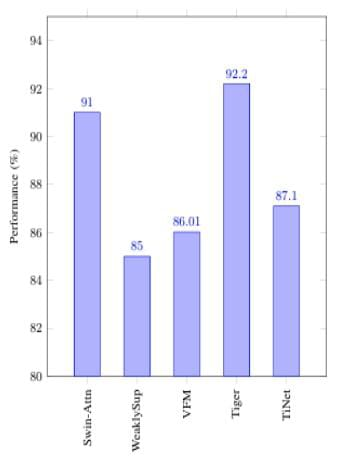
Deep learning (DL) has emerged as a powerful tool for improving the accuracy and consistency of thyroid cancer detection from ultrasound images. While numerous DL-based models have been proposed, their clinical applicability, generalizability, and interpretability vary significantly. This paper presents a comparative review of five influential and peer-reviewed deep learning paradigms for thyroid cancer detection: Swin-Attention Segmentation, Weakly Supervised Segmentation, Vision Foundation Models, the diffusion-based Tiger Model, and the human-interpretable TiNet framework. These models represent diverse methodological directions, including attention-driven segmentation, annotation-efficient learning, foundation model adaptation, generative data augmentation, and explainable diagnostic reporting. The review critically analyzes their architectural design, dataset usage, performance metrics, interpretability, and deployment readiness. Key research gaps are identified, including limited multi-center generalization, insufficient handling of rare thyroid cancer subtypes, inconsistent clinical benchmarking, and challenges in real-world deployment. By emphasizing clinical relevance alongside technical performance, this review aims to guide future research toward developing robust, interpretable, and clinically integrable AI systems for thyroid cancer diagnosis.
Downloads
Published
How to Cite
Issue
Section
License

This work is licensed under a Creative Commons Attribution-NoDerivatives 4.0 International License.
