Removal of Synthetic Dyes from Aqueous Solutions Using Low-Cost Adsorbents
DOI:
https://doi.org/10.65521/ijacsa.v5i1.4359Keywords:
Abstract
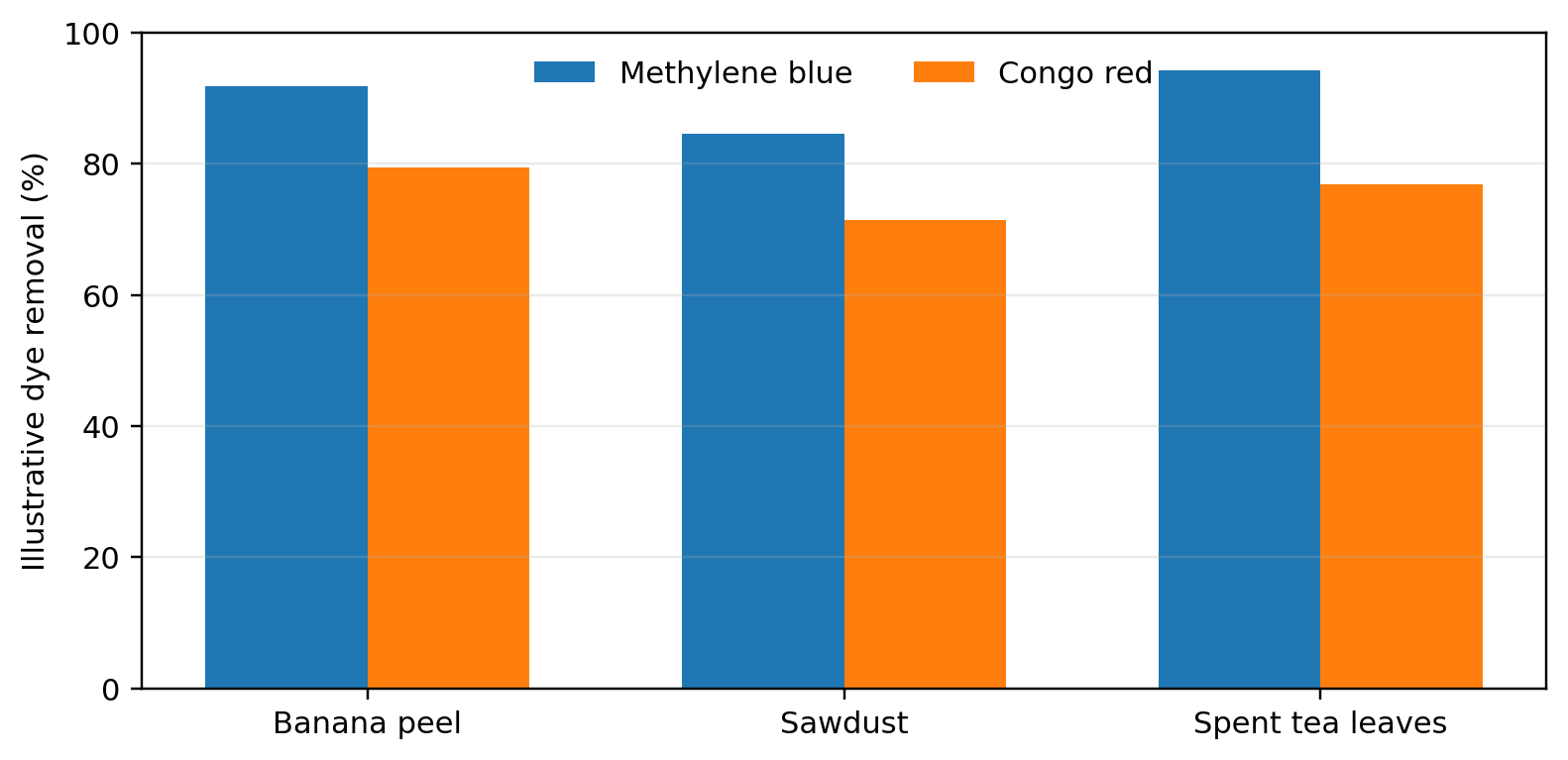
Synthetic dyes discharged from textile, printing, paper, leather and related industries are persistent color pollutants that can reduce light penetration, alter aquatic chemistry and create toxicological concerns. Adsorption is attractive for dye treatment because of its operational simplicity, but the cost of commercial activated carbon limits routine use in many small and medium-scale facilities. This methodology paper proposes a comparative batch-adsorption framework for the removal of methylene blue (MB), a cationic dye, and Congo red (CR), an anionic dye, using three inexpensive waste-derived adsorbents: banana peel powder, Indian rosewood-type sawdust and spent tea leaves. The procedure covers adsorbent preparation, dye calibration, effects of pH, adsorbent dose, contact time, initial concentration and temperature, followed by equilibrium, kinetic and regeneration analyses. Dye concentration is quantified by UV–visible spectrophotometry, while adsorption performance is expressed through percentage removal and equilibrium uptake. Langmuir and Freundlich isotherms and pseudo-first-order and pseudo-second-order kinetic models are used to interpret adsorption behavior. An illustrative methodology-validation dataset indicates higher removal of MB than CR for the selected untreated biosorbents, with spent tea leaves showing the strongest MB removal under optimized conditions. The framework is designed for low-cost laboratory implementation and can be extended to actual textile effluent after matrix-specific validation.