
Antimicrobial, Antioxidant and Photoluminescence Application of Phyto-Mediated ZnO Nanoparticles Produced from Euphorbia caducifolia Plant
DOI:
https://doi.org/10.65521/ijacsa.v15i1.3685Keywords:
Abstract
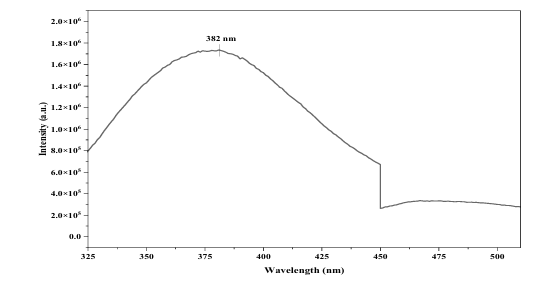
This work aims at the eco-production of zinc oxide nanoparticles (ZnO-NPs) using the plant extract of Euphorbia caducifolia and the assessed of their antimicrobial, antioxidant, and photoluminescence properties. Biosynthesis approach offers an cost-effective, sustainable and environmentally friendly method as compared to chemical approach because it employs the phytocompounds which are present in a plant extract as natural reducing and also stabilizing agents. Evaluate the synthesized ZnO nanoparticles properties using different analytical techniques like UV-Visible, Fourier Transform Infrared Spectroscopy (FTIR), X-Ray Diffraction (XRD), Scanning Electron Microscopy (SEM) and Photoluminescence (PL) analysis. UV-Visible demonstrated that the nanomaterial was formed as shown by the characteristic peak in absorption peak around 361 nm and FTIR analysis suggested that the bioactive functional groups participated in the production and stabilization of the nanoparticles. The XRD results revealed that the nanoparticles of zinc oxide are crystalline in nature and have hexagonal wurtzite structure, whereas SEM analysis showed predominantly spherical to hexagonal morphology with nanoscale dimensions. The synthesized nanoparticles showed good antimicrobial activity against the bacterial pathogens. The result of Antioxidant assessment by the DPPH assay showed that it contained concentration-dependent free radical scavenging activity with good antioxidant potential. A Photoluminescence study showed characteristic very intense ultraviolet peak and showed very less intense visible emission peak corresponding to the intrinsic defects and oxygen vacancies in the ZnO crystal lattice. The results prove that the Euphorbia caducifolia-mediated ZnO nanoparticles possess remarkable biological and optical properties, which makes them promising candidates for use in antimicrobial formulations, antioxidant therapies, biosensing, photocatalysis, and optoelectronic devices.
Downloads
Published
How to Cite
Issue
Section
License

This work is licensed under a Creative Commons Attribution-NoDerivatives 4.0 International License.
