A Comprehensive Review of Heart Disease Prediction Using Optical Electrocardiograms (ECG) and a Hybrid Convolutional Block Attention Capsule Network
DOI:
https://doi.org/10.65521/itsi-teee.v13i2.3858Keywords:
Abstract
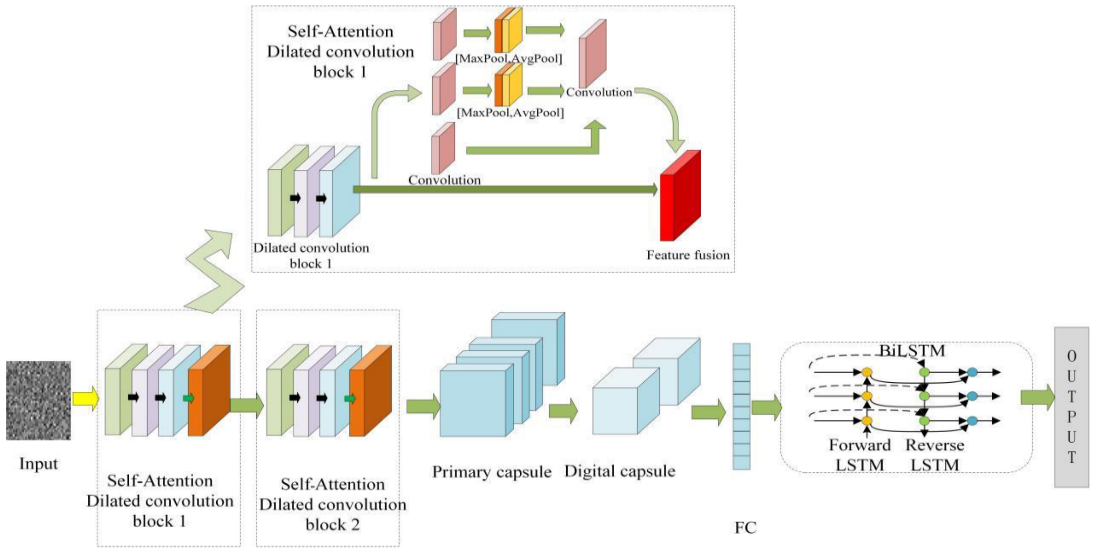
Heart disease remains one of the leading causes of mortality worldwide, necessitating accurate and early diagnostic systems. Optical electrocardiogram (ECG) techniques combined with artificial intelligence (AI) have emerged as powerful tools for non-invasive cardiac monitoring and disease prediction. This paper presents a comprehensive review of heart disease prediction methods using optical ECG signals integrated with hybrid deep learning architectures, particularly Convolutional Neural Networks (CNN), Block Attention mechanisms, and Capsule Networks (CapsNet). Optical ECG provides high-resolution physiological data, enabling effective feature extraction from cardiac signals. CNN models are widely used for automatic feature learning, while attention mechanisms enhance the focus on critical signal segments. Capsule Networks address limitations of CNN by preserving spatial hierarchies and improving interpretability. Recent studies demonstrate that hybrid CNN-attention-capsule models significantly improve classification accuracy, sensitivity, and robustness compared to traditional machine learning methods. Additionally, optimization techniques and hybrid architectures further enhance performance. This review analyzes research, highlighting key advancements, comparative performance, and challenges. Despite promising results, issues such as computational complexity, data variability, and real-time deployment remain. Future research directions focus on lightweight models, explainable AI, and integration with wearable healthcare systems for continuous monitoring.