
Helpdesk Chatbot: Technology and Human-Centred Design
DOI:
https://doi.org/10.65521/intjournalrecadvengtech.v14i3s.1657Keywords:
Abstract
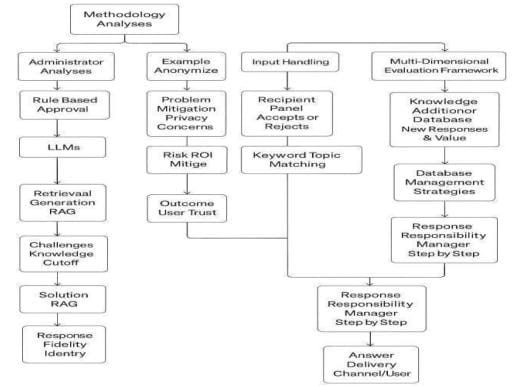
The proliferation of advanced Large Language Models (LLMs) has catalyzed a paradigm shift in enterprise customer service, transforming helpdesk chatbots from rudimentary scripted tools into sophisticated conversational agents. This paper presents a multi-dimensional analysis of the modern helpdesk chatbot, arguing that its efficacy and long- term value are contingent not merely on its underlying technological architecture but on a holistic and nuanced integration of technological design, economic realism, and human-centered evaluation. Through a comprehensive synthesis of recent academic and industry literature from 2023- 2025, this research explores the architectural evolution from rule-based systems to Retrieval-Augmented Generation (RAG), which has emerged as a critical technology for ensuring enterprise reliability. It critically examines the economic calculus of chatbot deployment, exposing the "ROI Mirage" where a myopic focus on cost reduction often obscures the significant financial and reputational costs of poor user experience. The analysis delves into the complex dynamics of the human-AI interface, highlighting the "empathy gap" and the phenomenon of "brittle trust" as primary barriers to user acceptance. Ultimately, this paper critiques the prevailing over-reliance on purely technical metrics for system assessment and proposes a new, multi-dimensional evaluation framework encompassing Technical, Human-centered, Contextual, and Temporal pillars. This framework is positioned not as a post- deployment checklist but as a proactive design driver. The paper concludes that the future of the enterprise helpdesk lies in a hybrid model, where AI agents function not as replacements for humans but as intelligent teammates, augmenting human capabilities to create sustainable, human-centric value.
Downloads
Downloads
Published
How to Cite
Issue
Section
License

This work is licensed under a Creative Commons Attribution-NoDerivatives 4.0 International License.
