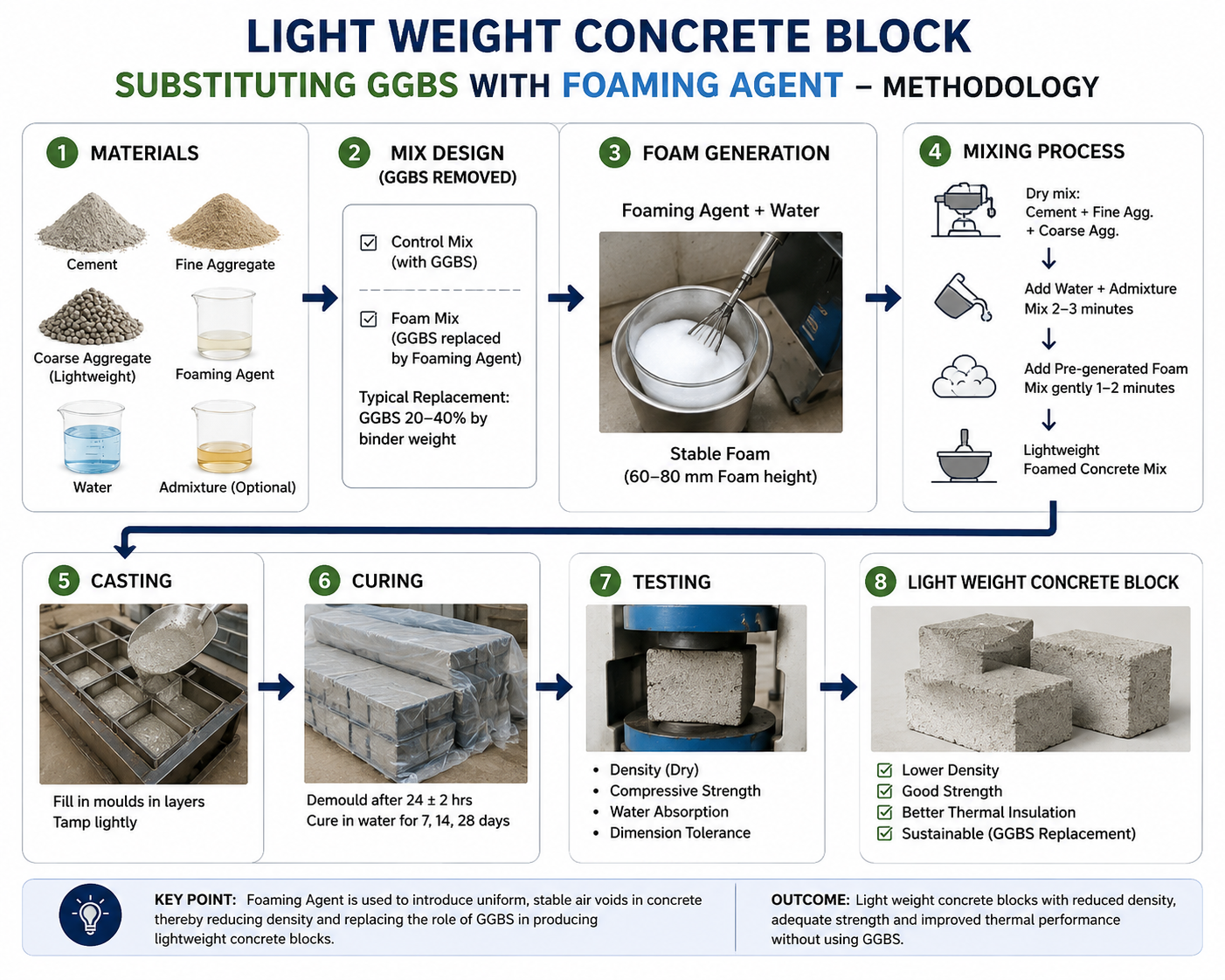
Light Weight Concrete Block Substituting GGBS with Foaming Agent
DOI:
https://doi.org/10.65521/ijeecs.v15i1S.3098Keywords:
Abstract
The review article looks at how Ground Granulated Blast Furnace Slag (GGBS) is used in foamed concrete blocks. Understanding how GGBS influences the strength, density, thermal characteristics, and durability of lightweight concrete blocks is the major objective. A byproduct of the steel industry, GGBS is frequently used as a partial substitute for cement to enhance concrete qualities and lower environmental effect. He reports examines prior studies on varying GGBS cement replacement ratios, foam producing techniques, and curing conditions. These variables influence foamed concrete's pore structure, dry density, compressive strength, water absorption, and thermal insulation. The research also looks at how well the blocks hold up when exposed to chloride and sulphates. The literature search reveals that using GGBS can lower CO2 emissions and cement use while simultaneously enhancing long-term strength and durability. For modern construction, this review helps in finding appropriate mix ratios for creating lightweight, strong, and environmentally friendly concrete blocks.