
A Comprehensive Review of IoT Edge Gateways: Models, Methods, and Emerging Applications
DOI:
https://doi.org/10.65521/ijeecs.v14i2.2136Keywords:
Abstract
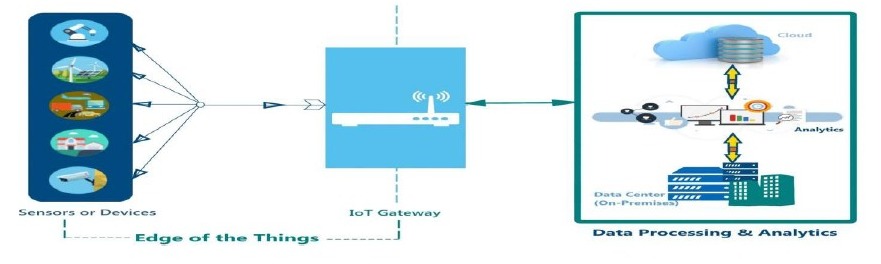
The rapid proliferation of Internet of Things (IoT) ecosystems has intensified the demand for efficient, scalable, and secure data processing architectures, positioning IoT edge gateways as a critical component in modern distributed systems. These gateways act as intermediaries between edge devices and cloud infrastructures, enabling real-time data processing, protocol translation, and localized decision-making. This paper presents a comprehensive review of IoT edge gateway models, methods, and emerging applications, with a strong emphasis on intelligent processing, security integration, and software engineering perspectives. The study systematically analyzes recent advancements in edge gateway architectures, including virtualization-based models, containerized microservices, AI-enabled gateways, and software-defined edge frameworks. Key findings reveal a shift from traditional rule-based processing toward adaptive, AI-driven edge intelligence, enhancing latency reduction, bandwidth optimization, and security enforcement. The review also identifies critical challenges such as resource constraints, interoperability issues, and security vulnerabilities in distributed edge environments. The primary contribution of this work lies in synthesizing recent research trends, identifying methodological gaps, and proposing future research directions that integrate edge intelligence with secure software engineering practices and DevSecOps pipelines.
Downloads
Published
How to Cite
Issue
Section
License

This work is licensed under a Creative Commons Attribution-NoDerivatives 4.0 International License.
