An IoT Smart-Helmet Interlock with Alcohol Sensing, Vision-Based Helmet Verification and Accident Alerting
Keywords:
Abstract
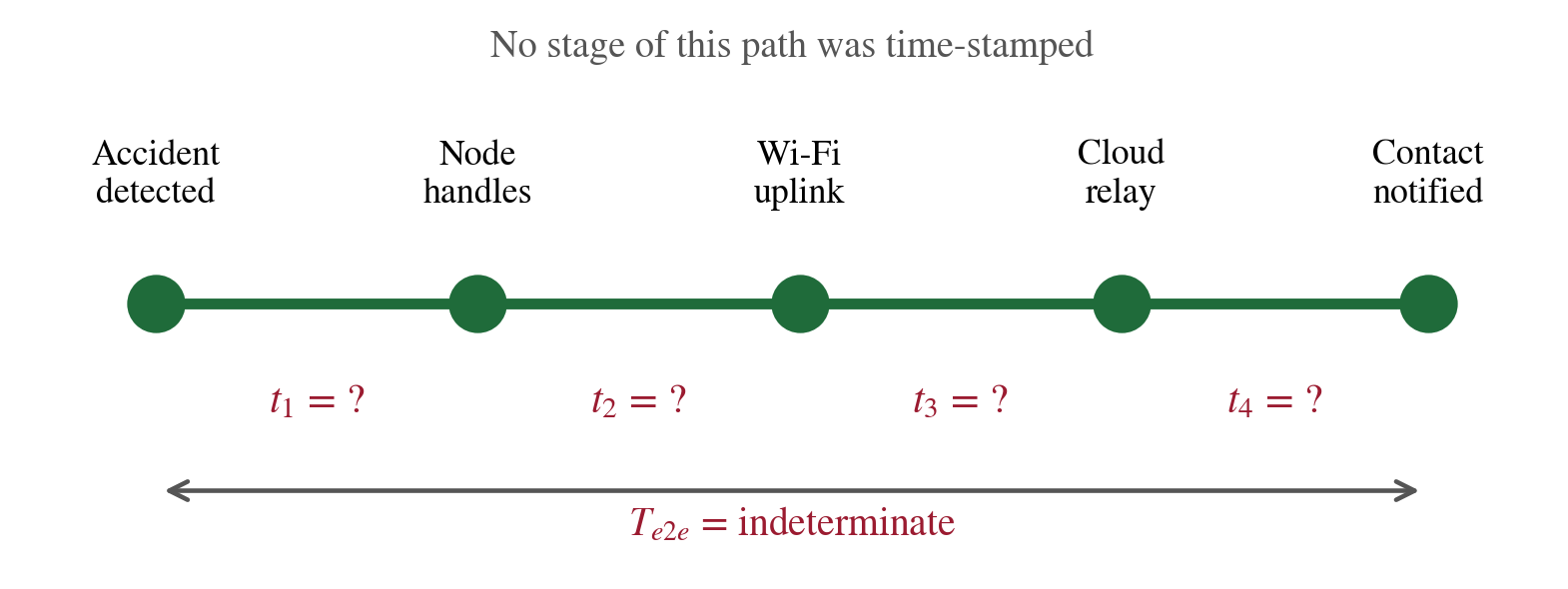
This paper reports a helmet-mounted safety system that conditions motorcycle ignition on two checks, that the helmet is worn and that the rider has not consumed alcohol, and raises a located alert if an accident is detected. The prototype couples infrared presence sensing and a metal-oxide alcohol sensor in the helmet to an Arduino controller, adds vision-based helmet verification on a Raspberry Pi Pico with camera, and uses an ESP8266 node with a satellite navigation receiver to publish status and location to a cloud dashboard, with a relay inhibiting the ignition. The interlock logic, sensor response law and alert-latency decomposition are formalised. The assessment is then explicit about three limitations that the source record does not address. The alcohol channel was never exposed to a certified reference, so its output remains an uncalibrated resistance ratio and no threshold in blood- or breath-alcohol terms can be justified; the paper therefore reports no concentration and no detection threshold. No stage of the alert path was time-stamped, so the end-to-end latency that determines whether the accident alert is useful is indeterminate and no response time is claimed. And no false-positive or false-negative rate was measured for either the infrared presence checks or the vision-based helmet check, which matters disproportionately here because a false positive strands a sober, helmeted rider. This revision adds the quantity a calibration would have to reach. The Indian legal limit of 30 mg of alcohol per 100 mL of blood corresponds, using the statutory blood and breath pair adopted in England and Wales as the conversion, to about 0.13 mg of ethanol per litre of breath; that is the concentration the interlock must resolve, and whether the fitted device spans it at useful resolution is not documented anywhere in the record. A further finding is that no accident-detection sensor appears in the component set at all, so the alerting function has no documented trigger. The safety, legal and tamper-resistance consequences of an ignition interlock are examined explicitly, and a measurement plan is specified.