Comparative Analysis of Cloud Computing Security Techniques for Secure Data Management
DOI:
https://doi.org/10.65521/ijaece.v8i1.4459Keywords:
Abstract
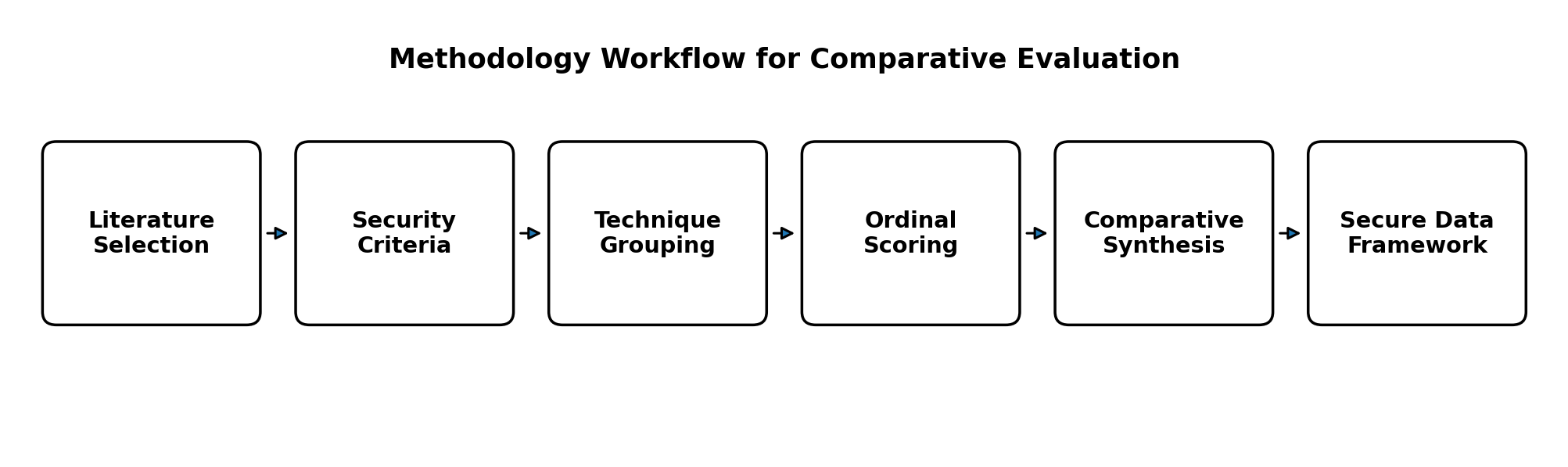
Cloud computing enables organizations to store, process, and share large volumes of data through scalable third-party infrastructure, but outsourcing data also expands the attack surface and reduces the data owner's direct control over confidentiality, integrity, access, and processing. This methodology paper comparatively analyzes major security techniques used for secure cloud data management, with the evidence base restricted to research published up to 2019. The study synthesizes literature on conventional encryption, attribute-based encryption (ABE), identity and access management (IAM), role/attribute-based access control, integrity auditing and provable data possession, privacy-preserving processing, and trusted virtualization. A structured comparative method is applied using six criteria: confidentiality protection, access-control granularity, integrity assurance, scalability/manageability, performance efficiency, and breadth of threat coverage. Each technique is assigned an ordinal literature-derived score from 1 (weak) to 5 (strong), and weighted scores are used only as an analytical synthesis rather than as experimentally measured benchmarks. The comparative results show that no individual mechanism adequately protects all stages of the cloud data life cycle. Encryption provides strong confidentiality; ABE offers fine-grained sharing; auditing mechanisms are strongest for integrity verification; and trusted virtualization reduces infrastructure-level risk. The highest overall protection is obtained from a layered hybrid approach combining encryption, fine-grained access control, integrity verification, multi-factor authentication, logging, and infrastructure isolation. The study therefore recommends defense-in-depth as the most suitable security strategy for secure cloud data management.