Recent Advances in Secure Medical Image Cryptanalysis with Quantum Neural Networks for IoT-Enabled Cloud Storage: A Systematic Review
DOI:
https://doi.org/10.65521/ijacte.v12i2.3829Keywords:
Abstract
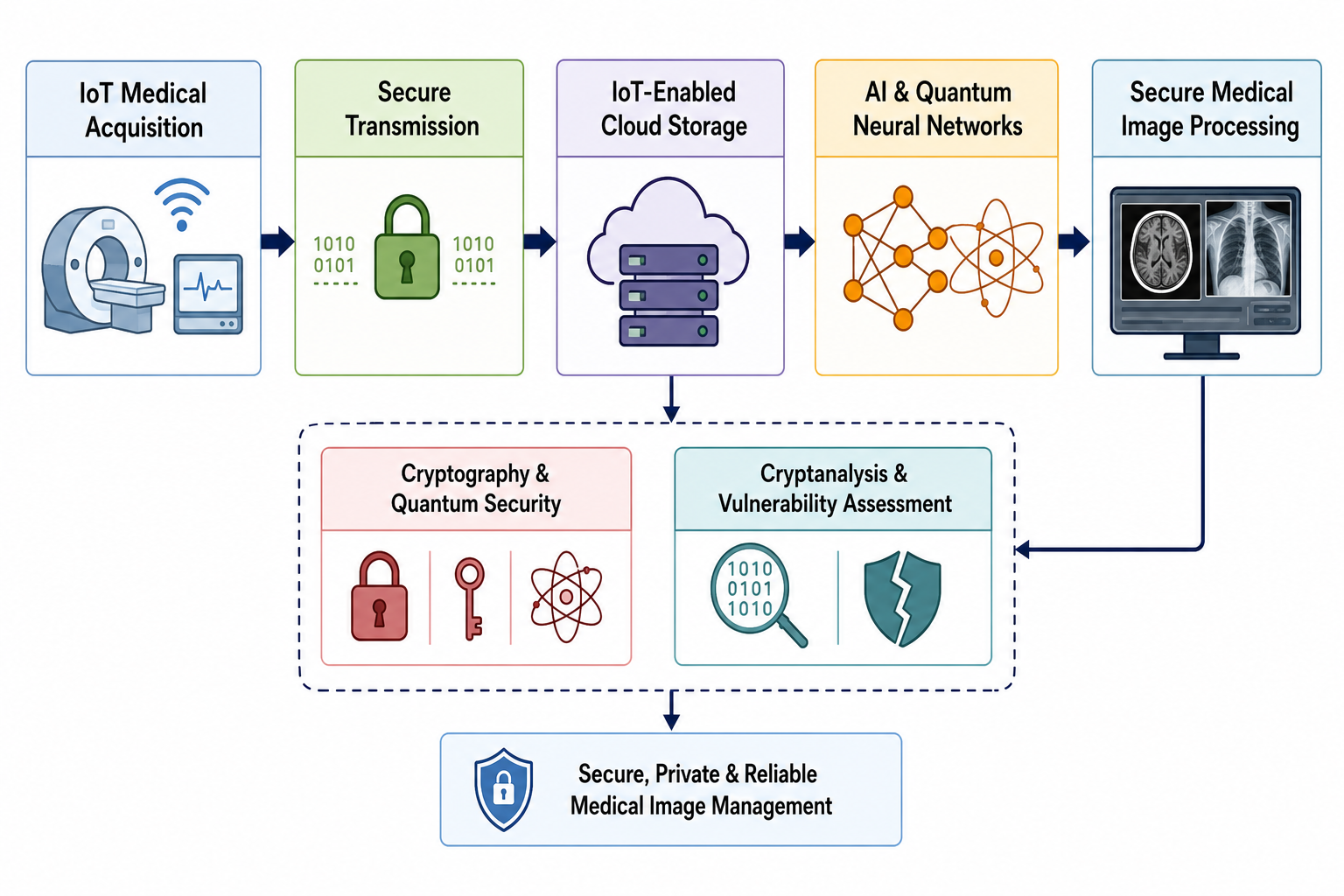
The rapid growth of IoT-enabled healthcare systems and cloud storage technologies has significantly increased the reliance on digital medical imaging for diagnosis and treatment. However, the storage and transmission of medical images over cloud platforms introduce serious security and privacy concerns, particularly due to cyberattacks, data breaches, and adversarial manipulations. Medical images, including MRI, CT, and X-ray scans, contain sensitive patient information that must be protected during storage and communication. Traditional cryptographic techniques, while effective, are increasingly vulnerable to emerging threats, especially with the advent of quantum computing. Recent advances in Artificial Intelligence (AI) and Quantum Neural Networks (QNNs) have opened new possibilities for secure medical image cryptanalysis and protection. Deep learning-based cryptographic techniques have demonstrated the ability to enhance image encryption, authentication, and secure transmission while maintaining diagnostic quality. Additionally, quantum computing introduces advanced cryptographic paradigms such as Quantum Key Distribution (QKD) and quantum-enhanced encryption, which significantly improve data security in IoT-enabled cloud environments. Quantum neural networks further enhance cryptographic systems by enabling efficient processing of high-dimensional medical image data while ensuring privacy preservation through quantum cryptography mechanisms. Moreover, recent studies highlight that adversarial attacks on AI-based medical imaging systems can lead to incorrect diagnoses, emphasizing the need for robust and secure architectures. This paper presents a comprehensive systematic review of recent advances in secure medical image cryptanalysis using quantum neural networks in IoT-enabled cloud storage systems. It examines AI-driven cryptographic techniques, quantum-based security models, and hybrid frameworks, while identifying research trends, challenges, and future directions for developing secure and efficient healthcare systems.