
A Study on Transaction Tools Used in Online Applications: Trends, Challenges, and Opportunities
DOI:
https://doi.org/10.65521/ijacte.v15i1.3817Keywords:
Abstract
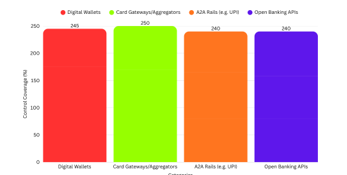
This study is for the transaction tools that determine the integrated delivery of online applications for digital wallets, card payment gateways, and also aggregators; account-to-account rails unlike UPI and open banking APIs. The paper explores the evolution of real-time payments, tokenization, and risk- based multi-factor authentication, and how market dynamics, regulations, and developers’ ecosystems impact adoption. The trends in instant payment adoption, cross-rail interoperability, and API-Driven integration-based adoption patterns have been synthesized from authoritative sources and public statistics. It further analyzes the security compliance challenges that still exist in production environments, these include API authoriza- tion gaps; inconsistent 3-D Secure flows; fragmented standards adoption; and the operational cost of PCI DSS v4.0. This work postulates a comparative framework that spans security controls, latency, availability, interoperability, and standards conformance, and the developer experience, enabling structured evaluation across tool classes. The study identifies areas such as privacy- preserving fraud analysis, tokenization-first architectures, ISO 20022-native developer tooling, and standards-aligned sandboxes for predictable SCA and error semantics as fruitful niches where opportunities are found. The results are summarized into tables and graphs to show adoption patterns, control coverage, and im- plementation trade-offs. Lastly, such paper presents prescriptive and readily implementable recommendations for improvement of security posture, reduction of friction, and acceleration of reliable integrations in modern transaction ecosystems to engineering leaders and stakeholders.
Downloads
Published
How to Cite
Issue
Section
License

This work is licensed under a Creative Commons Attribution-NoDerivatives 4.0 International License.
