Price-Aware Intelligent Load Scheduling Using Deep Recurrent Architectures
DOI:
https://doi.org/10.65521/ijacte.v15i2.3324Keywords:
Abstract
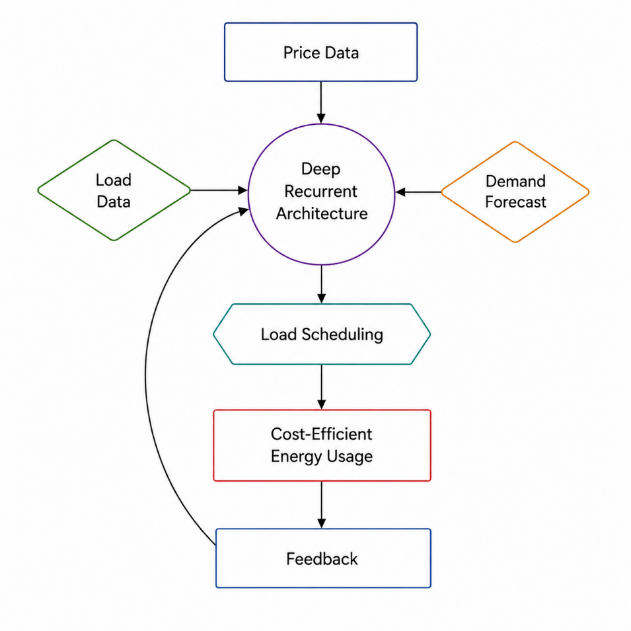
The increasing deployment of smart grids, dynamic electricity pricing mechanisms, and intelligent energy management systems has created a growing need for advanced load scheduling strategies capable of optimizing energy consumption while minimizing operational costs. Traditional load scheduling techniques often fail to effectively adapt to rapidly changing electricity prices, fluctuating consumer demand, and complex grid conditions. Consequently, intelligent scheduling frameworks that can dynamically respond to real-time pricing signals have become essential for achieving efficient energy utilization and cost-effective smart grid operation. This research proposes a Price-Aware Intelligent Load Scheduling Framework using Deep Recurrent Architectures (PAILS DRA) to optimize electricity consumption patterns according to dynamic pricing conditions and demand requirements. The proposed framework integrates real-time energy monitoring, dynamic price forecasting, consumer demand prediction, intelligent load scheduling, and deep recurrent neural learning into a unified architecture. Deep Recurrent Architectures, particularly Long Short-Term Memory (LSTM)-based networks, are utilized to capture temporal dependencies in electricity pricing and consumption behavior. The scheduling engine dynamically allocates flexible loads to lower-cost periods while maintaining user comfort and operational constraints. Experimental evaluation demonstrates that the proposed framework achieves superior scheduling efficiency, electricity cost reduction, demand forecasting accuracy, peak load management, and consumer satisfaction compared to conventional scheduling approaches, machine learning-based energy management systems, and intelligent smart grid frameworks.