Towards Fair AI: Ethics And Bias Detection in Decision Systems
DOI:
https://doi.org/10.65521/ijacte.v15i1.2945Keywords:
Abstract
Artificial intelligence is increasingly being used to support decisions in everyday systems, yet its outcomes are not always fair. This issue often arises because AI models depend on past data, which may reflect social or historical inequalities [2]. As a result, the system can unintentionally favor or disadvantage certain groups.
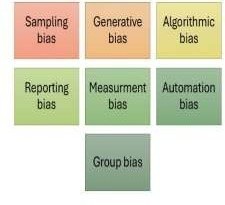
This paper explores how ethical thinking can be integrated into AI development to address such concerns. It focuses on identifying bias at different stages, including data preparation and model behavior, and discusses practical ways to reduce its impact.
Techniques such as examining data distribution, comparing model outputs across groups, and refining input features are considered. The study also emphasizes the role of transparency, where understanding how a system reaches a decision becomes essential for trust [5].
A simple framework is presented to show how fairness checks can be included during model design and evaluation. By combining ethical awareness with technical methods, it is possible to create systems that are more balanced and dependable. The work highlights that responsible use of AI is not only a technical requirement but also a social necessity for fair decision-making [4].