
Role of Artificial Intelligence Technology in Learning Environments for Achieving the Sustainable Development Goal of Quality Education (SDG 4) by 2030
DOI:
https://doi.org/10.65521/ijacte.v15i1S.1297Keywords:
Abstract
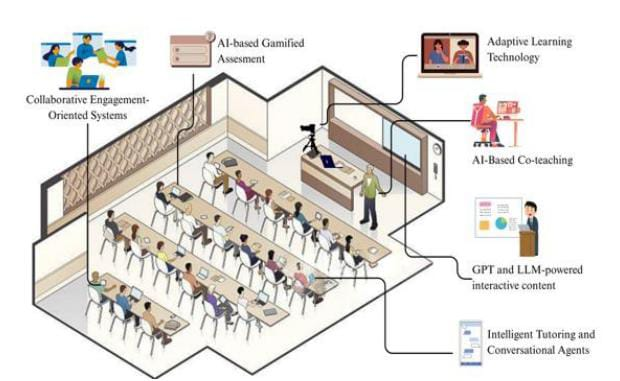
The rising prevalence of AI technologies is impacting existing learning environments, demonstrating its potential to promote equity, access, and quality in education. This research explores ways in which AI systems, such as intelligent tutoring agents, adaptive learning systems, assessment tools, and intelligent systems, are positioning us in terms of challenging the targets of the Sustainable Development Goal 4 (SDG 4), namely, equitable and inclusive high-quality education for all by 2030. A synthesis of current research, global educational policy, and the usage of artificial intelligence in education has been used to demonstrate how intelligent technologies contribute to personalization, real-time feedback, and data-driven decision-making. The potential for intelligent technology to address educational inequalities resulting from socio-economic differences is further explored alongside the consideration of the threats inherent in AI, for example, algorithmic bias, digital divides, or inequitable data handling practices. This work positions AI within active and adaptive pedagogical frameworks to illustrate its capacity as both a means of advancing and a threat to addressing SDG 4. Our research suggests that if we wish to see sustainable changes in education by 2030, we may need more than simply technological advancements to achieve these goals. We will need a policy, cross-sector collaboration, and, really, an ethical willingness to address issues to ensure AI implementations provide inclusive, quality education for all.
Downloads
Published
How to Cite
Issue
Section
License

This work is licensed under a Creative Commons Attribution-NoDerivatives 4.0 International License.
