Enhancing Recommendations Through Hybrid Sentiment Classification and User Profiling
DOI:
https://doi.org/10.65521/ijacect.v14i1.172Keywords:
Abstract
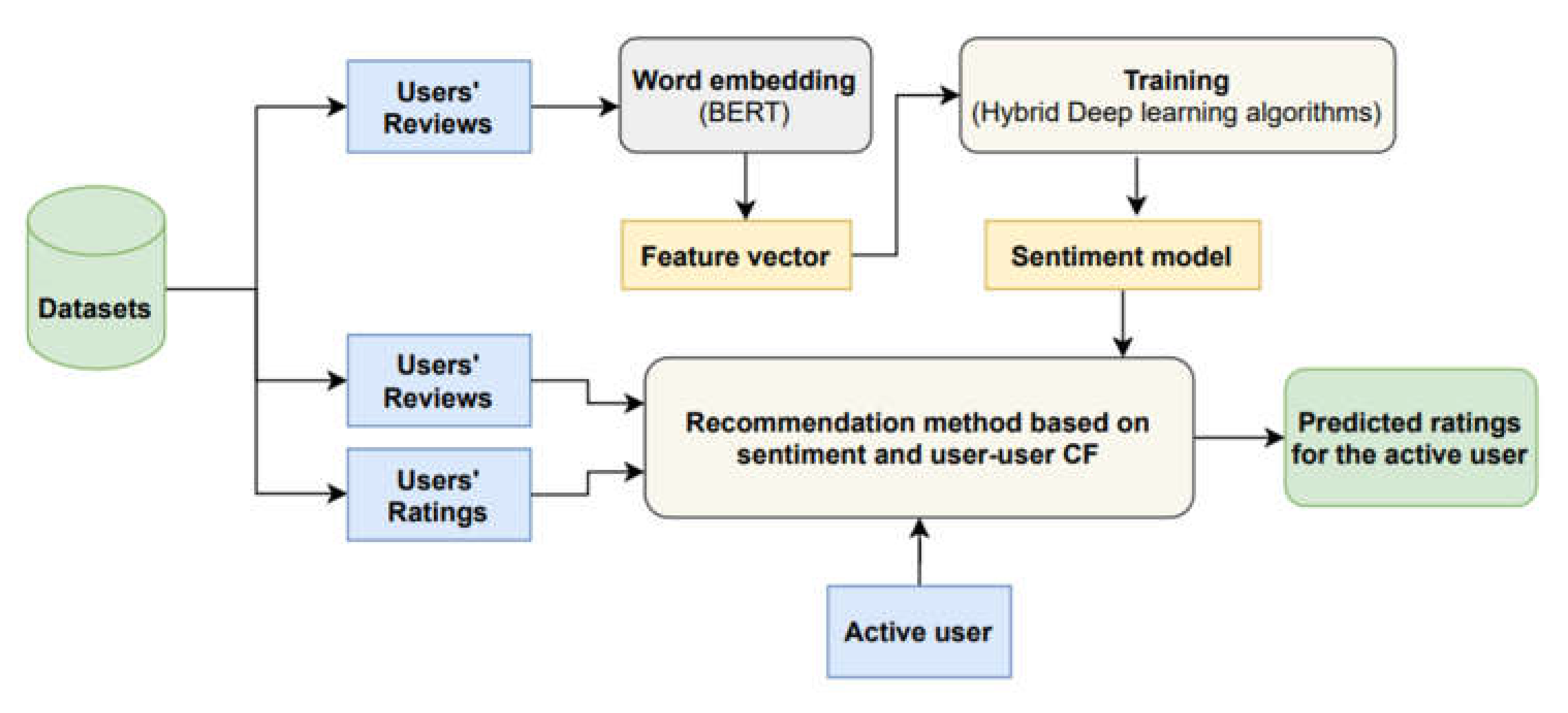
Recommender systems are vital components of modern digital platforms, providing users with personalized suggestions based on their historical interactions and preferences. Traditional recommendation techniques predominantly rely on numerical ratings and collaborative filtering, which often suffer from challenges such as the cold start problem, data sparsity, and lack of contextual understanding. These limitations can significantly reduce the accuracy and reliability of recommendations. To address these challenges, we propose a hybrid sentiment-aware recommender system that leverages both numerical ratings and the emotional content of user comments to enhance recommendation precision. The proposed model employs a two-dimensional Convolutional Neural Network (CNN2D) to analyze textual comments from YouTube, where user sentiments are categorized into five distinct levels: negative, neutral, positive, happy, and extremely happy. By extracting sentiment features from comments, the system gains a deeper understanding of user preferences that goes beyond simple rating values. The CNN model is trained and validated using dynamically partitioned datasets, and its performance is evaluated using Root Mean Square Error (RMSE) as the primary metric. Experimental results demonstrate that the integration of sentiment analysis significantly improves recommendation accuracy and robustness, particularly in scenarios involving new users or items. The system also supports real-time comment analysis and generates relevant content recommendations based on predicted sentiment, offering a practical and scalable solution for next-generation recommender systems.