
Blockchain-based Academic Certificate Fraud Detection: A Comparative Review and Combined Framework
DOI:
https://doi.org/10.65521/ijacect.v14i3s.1629Keywords:
Abstract
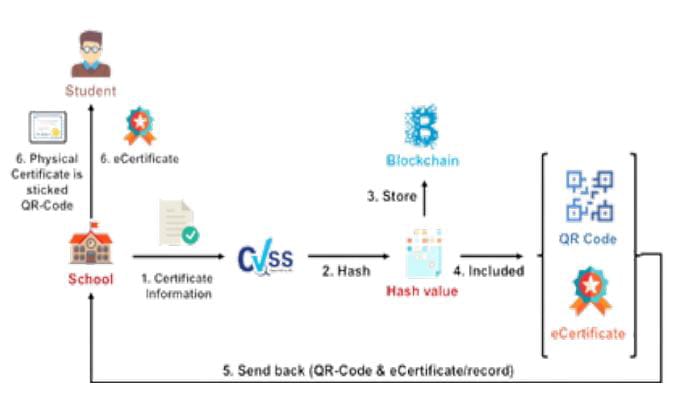
The rapid rise in forged academic and professional certificates has become a major challenge across higher education and employment sectors. Manual verification is slow, inconsistent, and vulnerable to manipulation, especially with modern digital editing tools. Over the past decade, researchers have proposed automated approaches combining image forensic techniques, machine learning, and blockchain to enhance accuracy, transparency, and tamper-proof validation. This review summarizes recent advancements in feature extraction methods such as GLCM, LBP, SIFT, and copy-move detection, as well as deep learning models including CNN, VGG-16, and ResNet for forgery identification. It also examines blockchain-based frameworks leveraging IPFS, QR codes, and decentralized ledger architecture for immutable credential verification. Strengths, limitations, datasets, and implementation challenges are critically evaluated. The review concludes by proposing an integrated framework that combines machine learning-based forgery detection with blockchain-supported authentication to achieve secure, scalable, and trustworthy certificate verification.
Downloads
Published
How to Cite
Issue
Section
License

This work is licensed under a Creative Commons Attribution-NoDerivatives 4.0 International License.
